I was leading a group in Venice during Carnival. It was raining. Umbrellas passed one another on the Rialto, and near St Mark’s, people in cloaks and masks threaded their way between the raincoats. At some point, we started putting on masks too. We were still walking the same streets, but for a while we could be someone else.
Santa Lucia — Where the Station Meets the Sea
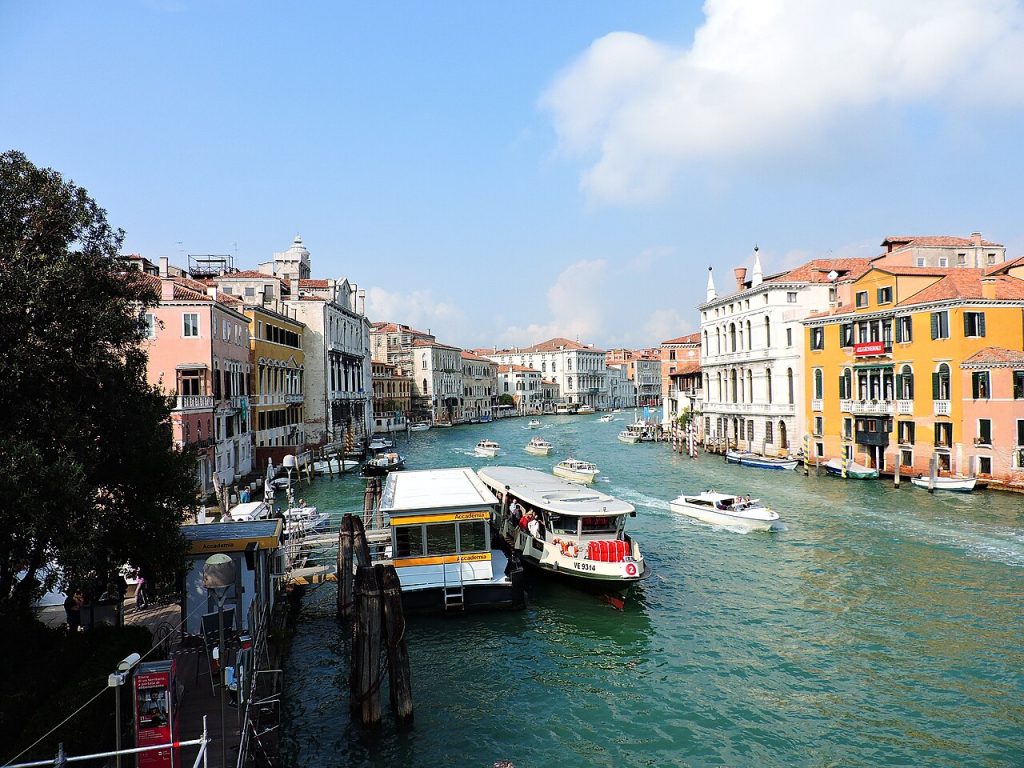
At the top of the stairs of Santa Lucia station, a man instinctively moves a little to the side. Behind him the passengers still exit the building, the casket wheels hitting the edges of the column, and in front of him the Canal Grande opens over all this. On the other bank is the facade of the Church of San Simeon Piccolo, between the two banks passes the vaporetto, and the water it leaves behind hits the stone long after the ship has moved away. In front of most European stations, you must first cross the street. Here we have to decide whether to go by water, by water or by water. This is a good introduction to Venice.
The name of the station has preserved the memory of the Church of St. Lucia which stood on the site before the construction of the railway. In a city where there is so much talk about conservation, it is interesting to start with a building that is no longer there. In the nineteenth century, the railway brought a direct connection to the mainland through the lagoon and changed the way the city was reached. Once Upon a time, the facades were read from the ship, in the order in which they appeared on the water. From the train, after a straight track stroke, Venice appears almost at once. It should be given a few minutes to become a space in which to walk again, not just an image that suddenly found itself before the eyes.
From the mud to the city
The Scalzi bridge carries the canal into Santa Croce. From the top of the bridge it is easier to discern how much is going on here at the water level. The cargo ship can be approached by the gates of the palace, the passenger docks with the floating pier, and the narrow boat is pulled under the bridge that the pedestrian crosses in a few steps. It is enough to look under the windows, towards the House sills along the canal, to understand how a good part of the city was built for coming from the other side than the one we approach today.
In late antiquity and the early Middle Ages, the inhabitants of the mainland took refuge on the lagoon islands during periods of war and political turmoil. Settlements grew gradually, in a world where the legacy of the Eastern Roman Empire was still important. In the textbook, such a beginning is gladly summarized in one date or one escape. Laguna remembered several arrivals, and a part of the population knew how to live from it even before the settlements on the islands thickened. Shallow passages, silt and shifting channels made it difficult for those who did not know them. People who knew where to pass were given safety and a path to the sea.
Venice grew when the skills of these people began to complement each other. The one who kept the boat, the one who knew when to sail, the one who sold salt or carried the cargo were all part of the same business. Wooden piles in soft ground, stone foundations and embankments required an organization not seen on the finished facade. The city had to maintain both the waterways and the land on which it stood. This is a strange thought that appears on the first Venice bridge. So many people have been worried for centuries that nothing will move under our shoes.
Rialto - the price of spices and weight of stone
Through Santa Croce and San Polo towards Rialto one can go via Campo San Giacomo dall'orio. It's good to slow down there. The Square is wide enough to see the sky again after the narrow passages, and the gaps between the houses give a hint as the city grew around its smaller centres. More and more roads continue to the market. Near the fish market, it is easy to imagine how long human labor has been measured here in the cargo that someone will deliver, weigh and sell before noon. Today's fish and vegetables belong to a different economy, but the proximity of the dock and the sales desk still explains the choice of location.
Ira was wearing a mask by the Rialto. That day, I saw the Rialto framed by the profile of the woman who had won my heart first and then all of Venice. Up on the bridge, people passed one another under umbrellas. By the canal there was room to stop and watch the water flow beneath the arch. From there you can see how close the Rialto is to the water, and why it made sense to put the market right by the landing stage.
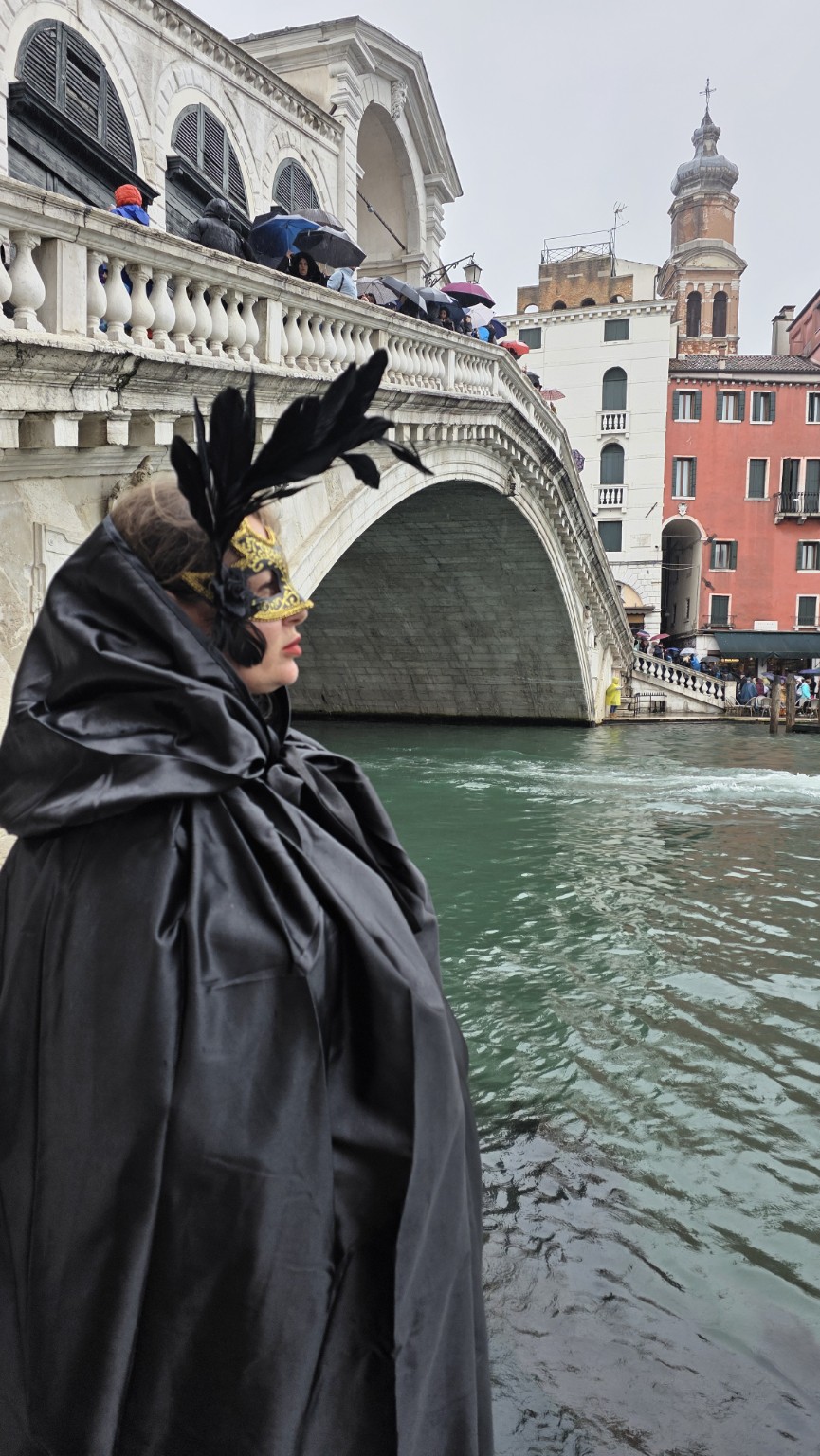
The medieval Rialto gathered merchants, middlemen and money changers. The value of pepper or cinnamon on this part of the canal was calculated according to how much it cost to bring cargo from ports in the eastern Mediterranean. The price included transportation, risk and time between investment and sale. The people who had a share in the cargo had to trust each other at least so much that the ship could sail. That is why contracts, books of accounts and state protection of maritime routes were important for Venetian wealth along with the galleys. Trade fed the state, and the state determined by its privileges and arms who would trade under what conditions.
At the bridge itself the shop still interrupts the view of the canal. Between a series of shops and outdoor staircases you can choose whether you want to cross straight or stand over the water. The Stone Arch of Antonio da Ponte was erected at the end of the sixteenth century, on the site of older crossings. For centuries, the Rialto was the only bridge across the Grand Canal. In such a city, the transition becomes a valuable piece of space. When we climb from the market to the top of the bridge, it is enough to turn to the side of San Marco to cross in a few meters from the world of accounts and goods into the streets leading to the State stage.
Saint Mark-Gold brought over the sea
From the Rialto through the Mercerie Square is gradually discovered. After narrow streets, you first feel how much more light there is suddenly. Where the facades could hitherto be viewed at close range, there are now enough for the entire square. The Basilica at its end collects views of domes, arches and mosaics that are in the same composition both opulent and somewhat restless. Every time the eye seems to have found a place to rest, another detail pulls it sideways.
I gathered with a group in Piazzetta, next to the Doge's Palace. It is enough just to turn away from the main square and in front of us, between the palace and the library, a lagoon opens. Under the bell tower we were more colorful because of raincoats than because of masks.
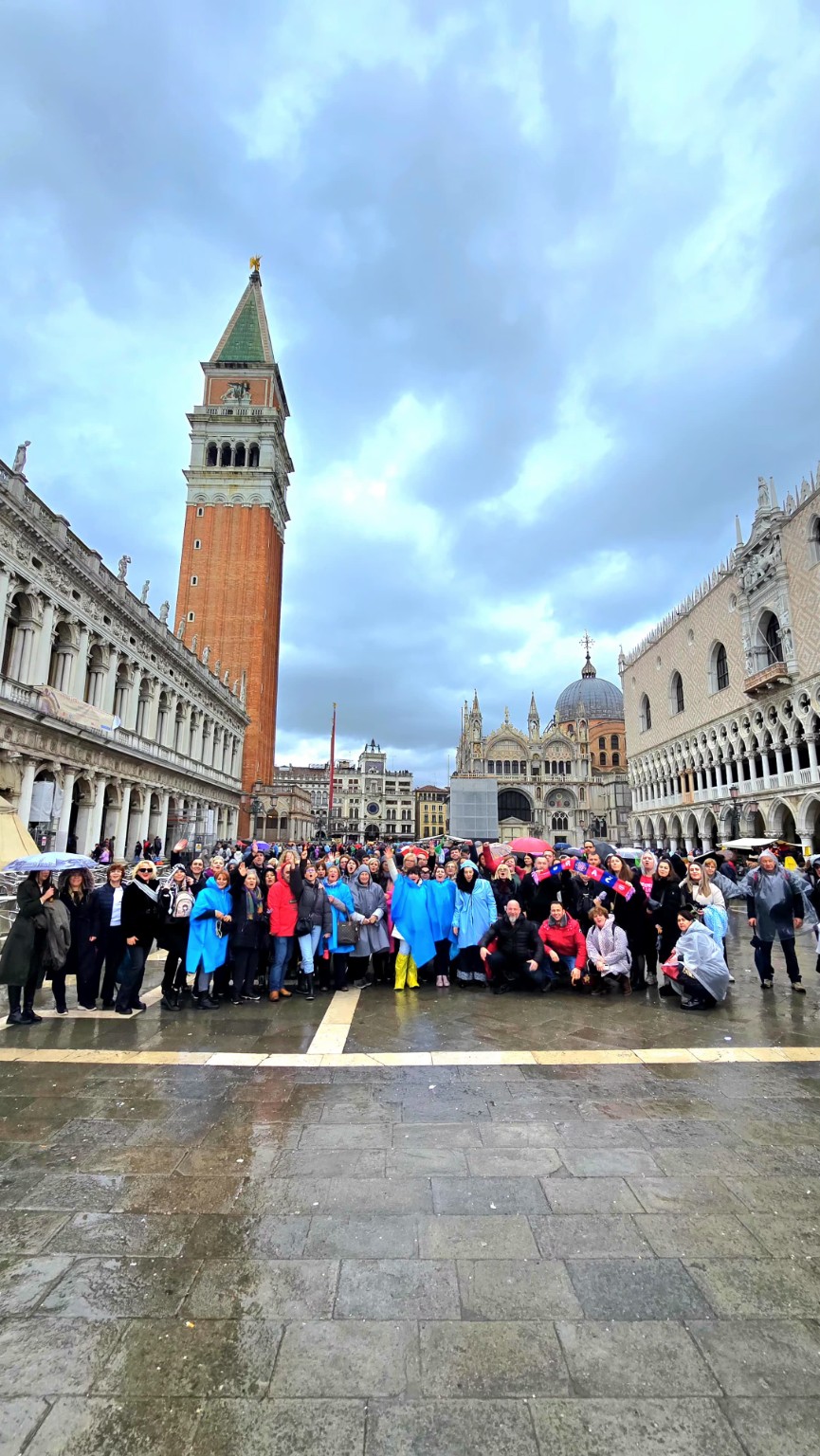
According to Venetian tradition, there were two merchants around 828. from Alexandria brought the relics of St. Mark. The story of how they hid them under the pork belongs to the transmission tradition. The city received in the evangelist a protector whose winged lion will henceforth speak in the name of his authority and away from the lagoon. For centuries, the basilica was the Doge's chapel, right next to the palace. Even without knowing the history of the church, the view of this combination of buildings explains how close the saint and the Republic were in the Venetian representation of their own power.
Four horses above the facade open the second chapter. There are copies in the open air, and the original antique group is kept in the Museum of the Basilica. She arrived in Venice after the conquest and sack of Constantinople in 1204. in the Fourth Crusade. Other precious pieces of church equipment are associated with similar journeys. Byzantine art came to Venice in a long exchange, and part of it as spoils of war. One can look at horses for a long time because of the tension in the neck and the position of the raised legs, and only then think of the city from which they were carried. There is more history in this subsequent thought than in the listing of the treasures of St. Mark.
The bell tower is the simplest form on the square. It is this simplicity that allows it to stand above the Basilica and the palace as a measure, almost as a vertical line on the edge of a complex painting. The old tower collapsed in 1902., and the rebuilt opened in 1912. Today's veduta of the Square, which would be easy to declare an unchanged image from the Doge's era, carries within itself the decision of the people of the twentieth century about how much they needed this outline.
The Winged Lion of St. Mark was left by Venice on the gates and walls as a sign of her authority. For centuries, it expanded its power through trade, treaties and fleets, so it was well known by the people on our side of the Adriatic. For carnival, I also tried to conquer the world. I started with a lion of Venice and that's where my quest ended.
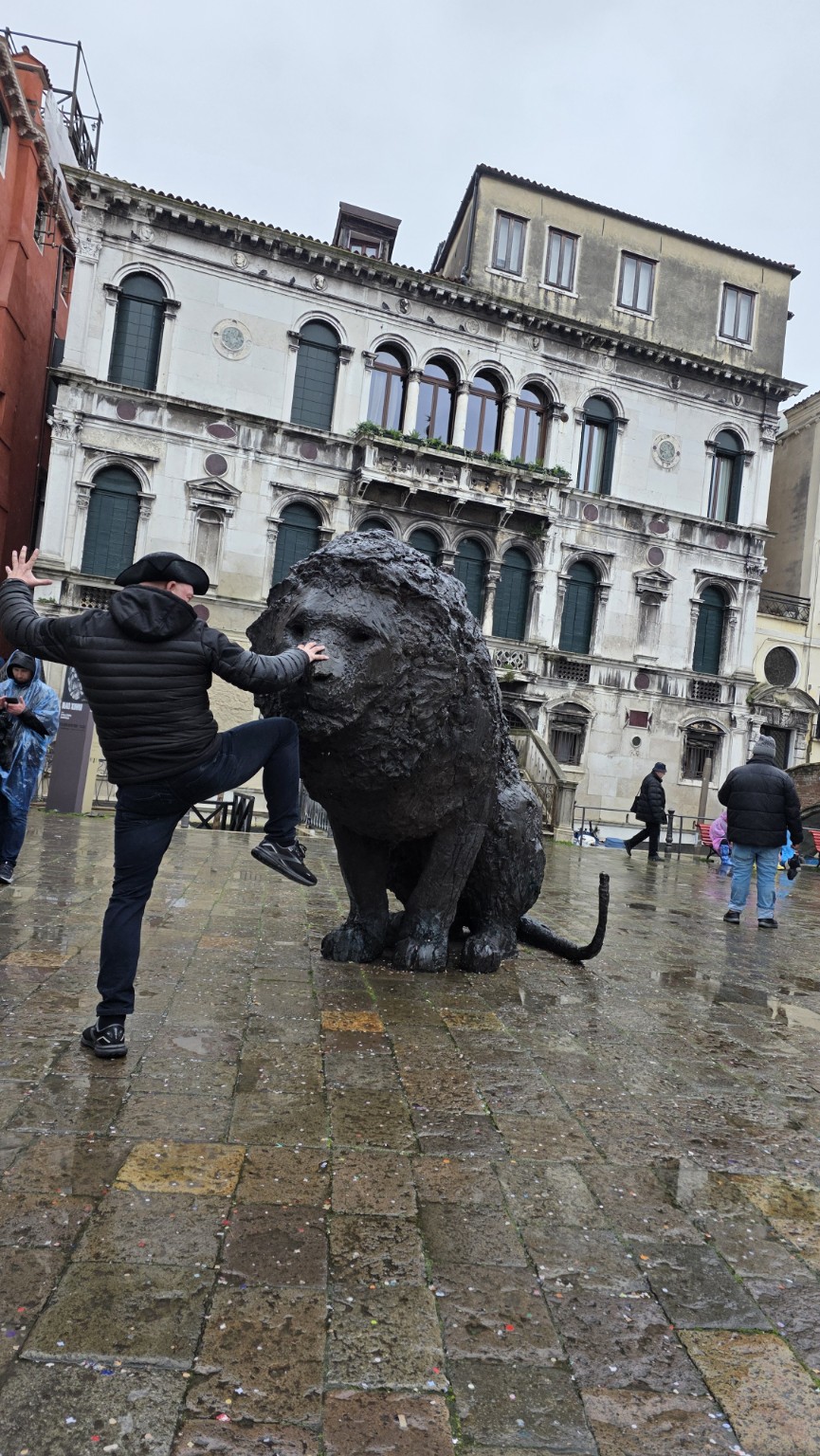
Carnival on Venetian streets
During Carnival in Venice, you can be whoever you like, if only for the time it takes to cross a square or walk down to the waterfront. Slip on a mask and the coat you put on that morning suddenly becomes part of a costume. Aunt Dinka chose a mask with little bells.
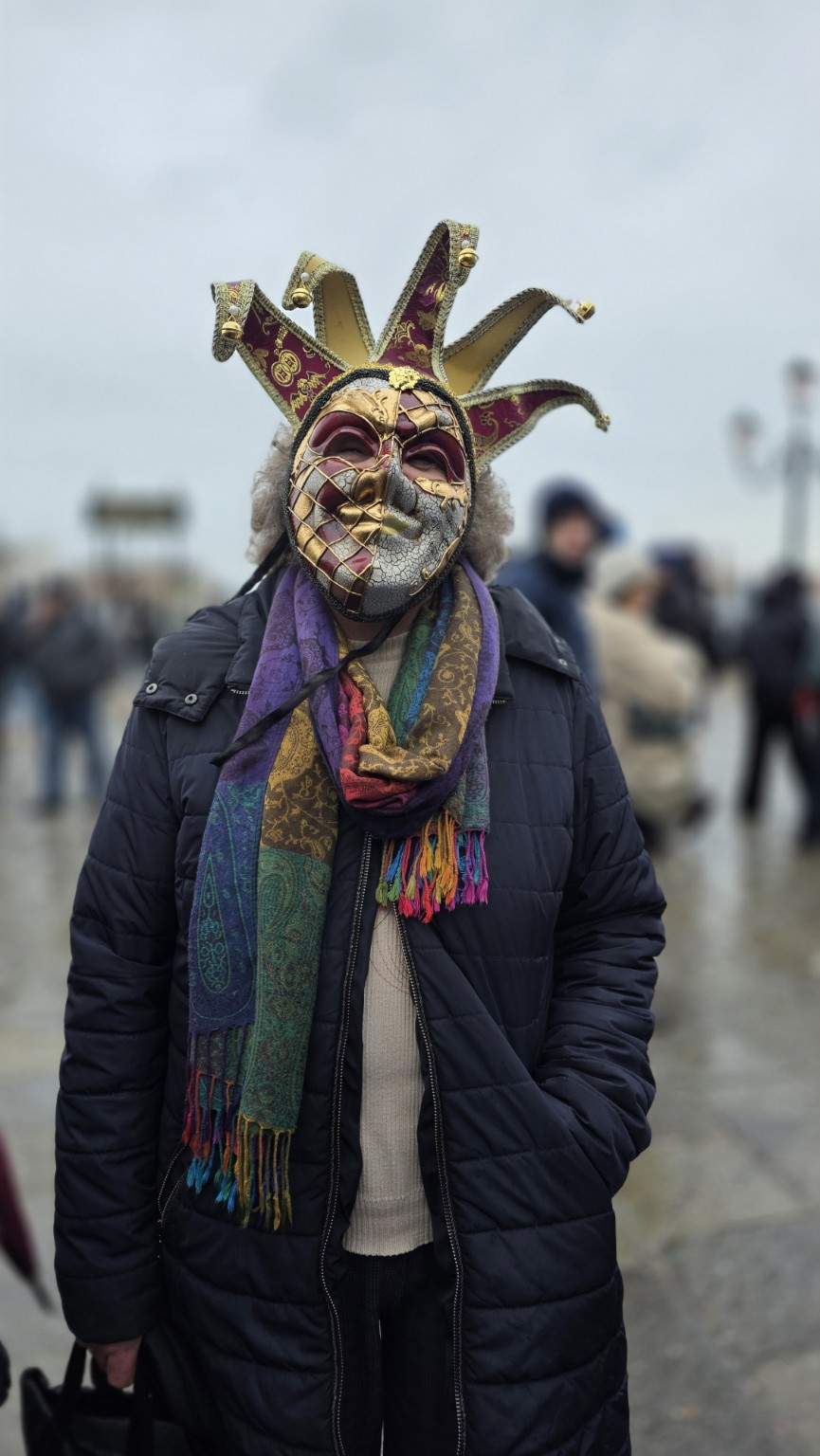
Along the lagoon there were wet confetti at your feet. Someone put the whole costume under the hood, someone put the cape over the winter jacket. It's easy to get involved, even if you're just walking around town.
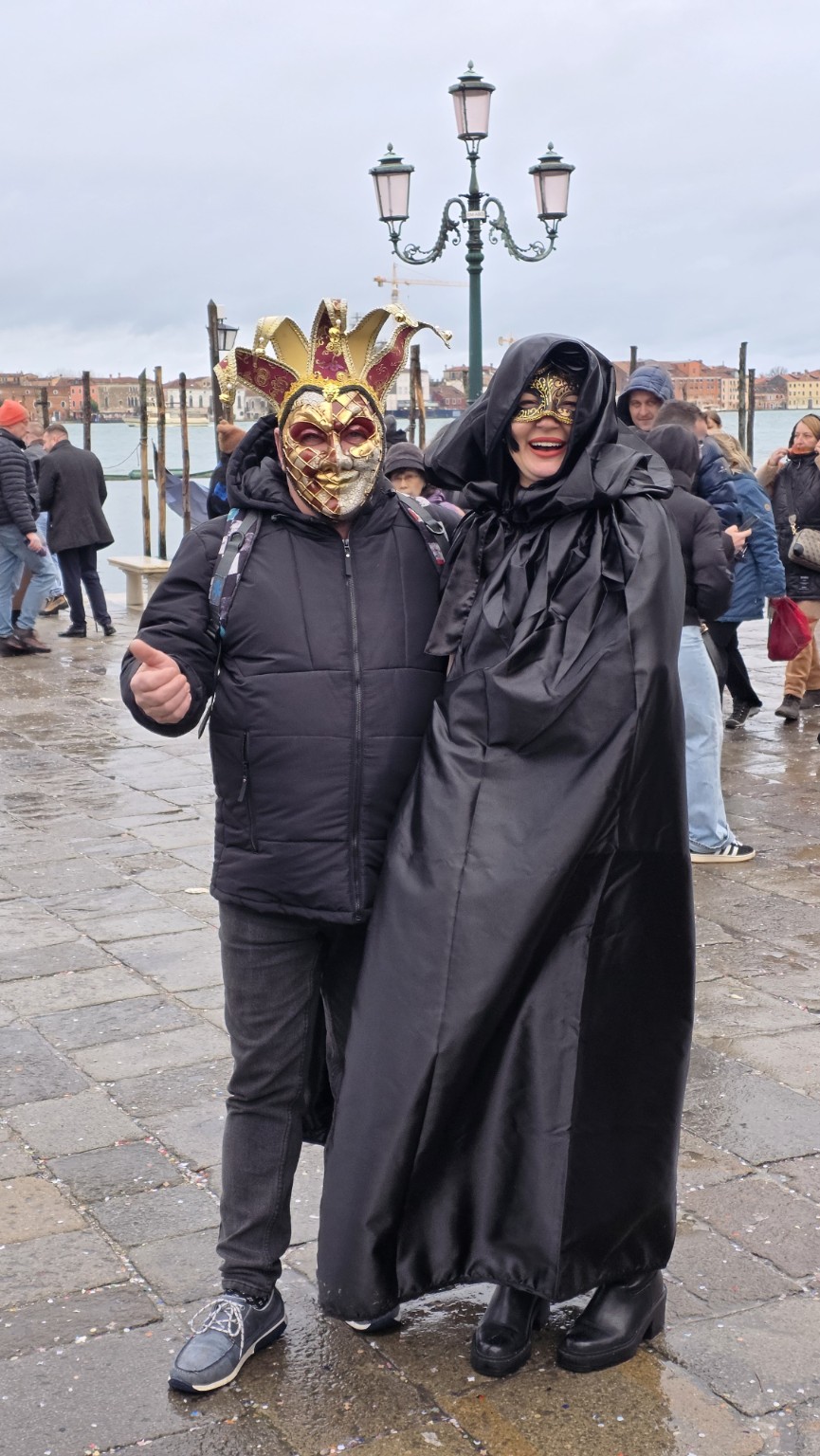
The earliest written mention of a carnival in Venice goes back to 1094. a year. In the early days of the Republic, the authorities prescribed when and where masks should be worn. It made sense for the government to do that. When your face disappears under a mask, it is harder for the interlocutor to know who he is talking to and how to address him. Today's carnival was restored in 1979., and that little freedom is still part of its appeal.
The Doge's palace-how much power can fit into one Hall
With the Piazzetta, which connects the square to the water, the Doge's Palace looks easier than it would be for a building where war and peace were decided. Open arches at the ground bear the upper part lined with bright and pink stone. From the outside, it's hard to imagine the whole set of institutions that should have stopped there. From within, this complexity is shown in the series of halls and in the fact that almost every decision could have concerned another body, another procedure or another circle of people.
The Doge was elected for life, but the council system and obligations restricted him. The Grand Council brought together men from politically privileged patrician families and formed the basis of an order in which the holders of numerous offices were elected. The Senate dealt with business from Commerce to foreign policy. The Council of ten, established in 1310. after the failed plot, it acquired an important role in protecting the state and persecuting those it considered a threat. At the same time, this system needs to see the ability to share power among many and how it can remain in the hands of a relatively narrow class. From an able merchant to a politically influential man he led a very definite path. The money could make it easier, and the origin could decide if it would open at all.
In the Great Council Chamber, the vast Paradise by Tintoretto and his workshop fills an entire wall. It is hard to take in every figure at once. Imagine a full chamber beneath it and you see why its sheer scale mattered. The Republic surrounded its councillors with images of the past and of an order greater than any individual. That sense of height vanishes in the passages leading to the prison. The enclosed Bridge of Sighs connects the palace to the New Prisons across the canal. Passers-by admire its graceful arch from the Ponte della Paglia. Inside, the route was shaped for people who crossed it against their will.
Riva degli Schiavoni - the other coast of the Adriatic
Cross the Ponte della Paglia and you reach the Riva degli Schiavoni. A few steps from the palace, your gaze changes direction. You can look across St Mark’s Basin to San Giorgio Maggiore, while the waterfront continues towards Castello. Its name preserves a trace of people from the eastern Adriatic who came to Venice by ship, for work or to settle. The Venetian term Schiavoni once had a wider meaning. Here, on the waterfront and in the nearby confraternity, it takes on a distinctly Dalmatian address.
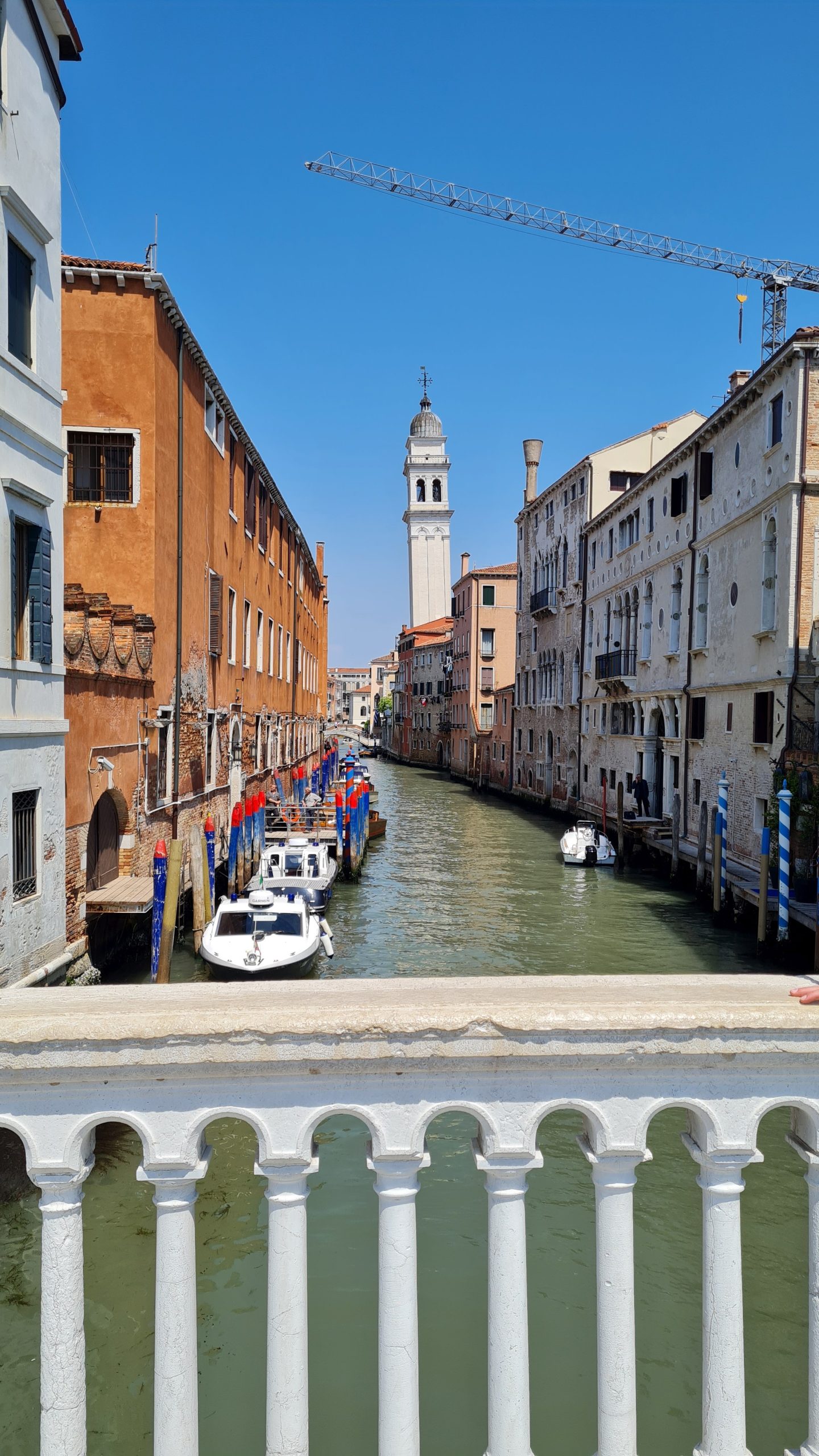
From the sea, Dalmatia was a series of piers in Venice on a long journey to the south and East. The people of these cities were the place of profit, the center of government and sometimes the opponent whose decisions were to be resisted. Peace of Zadar 1358. he temporarily pushed Venice off a large part of the Dalmatian coast. The political situation changed again in 1409. when Ladislaus of Naples ceded Zadar, part of his possessions and his rights to Dalmatia, to the Venetians for a hundred thousand ducats. The rights recorded in the deed and the authority over the actual city were two different things. What followed was decided by negotiations, resistance and the army. Split, Trogir, Hvar and Brač found themselves under permanent Venetian rule in the following period, around 1420. The general providur later sat in Zadar, and decisions on Dalmatian ports and defense were made over the table we had just left in the palace.
In Istria, Venetian estates were formed at a different pace. Poreč, Rovinj and Pula belonged to the coastal belt ruled by Venice, while the Habsburg rule survived in the interior around Pazin. That is why through the history of Istria, it is also passed along the old borders that are not announced on today's road. Local statutes and councils remained in the Dalmatian communes under the Mleci, but the Republic decided what it held important to itself. Looking only at the Winged Lion at the door means jumping over all those who lived under it, counting how much they would have left from the trade and sheltering in the face of wars in the hinterland.
The stone on which this heritage is most easily seen today belongs to different people and times. On the Trogir Square, in the palaces and on the bell tower of the Hvar cathedral, you can recognize the forms that traveled through the Adriatic, but were processed by the hands of local and immigrant Masters. In Brač, such a relationship with the sea is particularly close. The island had its own communities, land and stone, and what went out of it or came to it was crucial what happened in the ports across the sea. From the Riva degli Schiavoni it is easier to imagine that route in the reverse direction, from a ship approaching Venice towards the coast that its passengers left behind.
Castello — St George at the Dalmatian Brotherhood
From the waterfront one has to turn towards the interior of Castello, over the area around San Zaccaria towards Ponte de la Comenda. After the open bank the canals narrow again. The facade of the Scuola Dalmata di San Giorgio e Trifone can be fully viewed from the small bridge. The stone relief of St. George on it announces what will appear inside to a much greater extent. The building is modest by Venetian standards and therefore it shows how little space it needs to show whose it is.
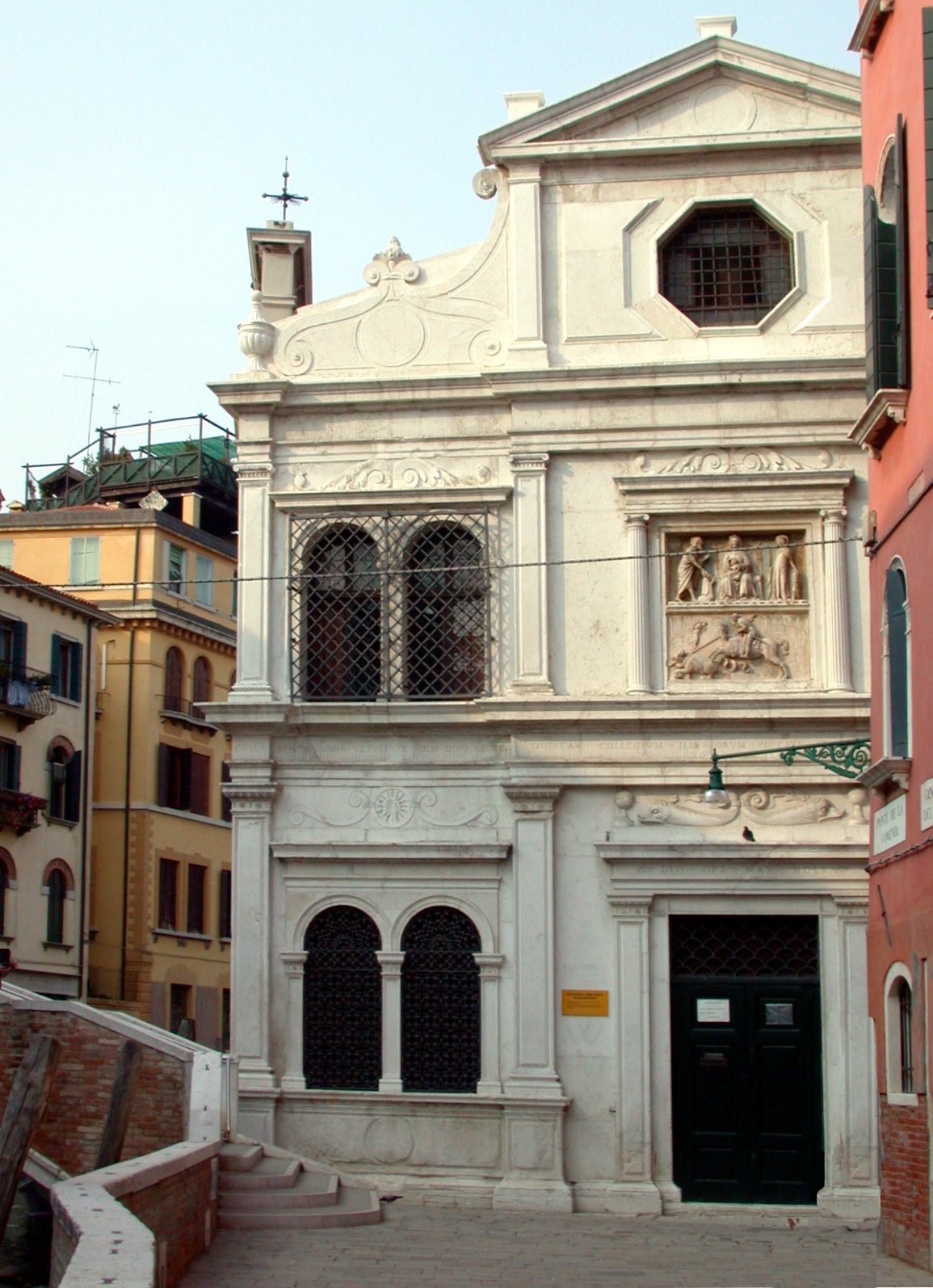
In 1451 the Dalmatians of Venice received permission from the Council of Ten to establish their confraternity. In this Venetian context, a scuola was a religious and charitable association. For someone arriving far from home, this was a place where their origins mattered and where they could ask for help. The confraternity fostered devotion and brought together people who might never otherwise have met in a great port city. The fact that the Council of Ten granted permission connects this small building in Castello to the great halls we have just passed through.
At the beginning of the sixteenth century Vittore Carpaccio painted for the Brotherhood a cycle of large canvases with scenes from the lives of Saints George, Tripun and Jerome. In the battle with the Dragon of St. George it is easy to follow the outstretched spear and the horse that enters the scene at almost full speed. In the painting of St. Augustine in the study it is worth to dwell on the objects. Light enters the space of books and work, and the little dog seems to be the only one able to perceive the change before man. In just a few steps between the canvas Carpaccio changes the pace from storming to silence. The greatest work of the brotherhood can perhaps be hinted at precisely that the paintings still stand in the room for which they were made. Grant of 1451 you don't have to show anyone anymore. The house is still there.
La Fenice — Who Watches Whom from the Opera Boxes
To continue towards San Marco it makes sense to return via San Zaccaria and then get out of the crowd around the square towards Campo San Fantin. There stands La Fenice, a theatre opened in 1792., five years before the collapse of the Republic. Venice could then still invest in a new opera house and have an audience that was well versed in the acoustics, the layout of the lodges and the cost of the whole undertaking. In the box you could listen to the singer and see who came across the street. The city, which for centuries carefully determined who had the right to stand at a public ceremony, had a keen sense of who could see who in the theatre.
Giacomo Casanova belongs to that Venice, but the prison brings his story back from the costume to the actual city. He escaped in 1756. from Piombi, the prison quarters under the lead roof of the Doge's Palace. The bridge of Sighs belongs to another part of the prison system. That small geographical difference is often lost because it is easier to connect the most famous bridge and the most famous prisoner. Casanova later became famous with his own version of the adventure, and the Palace provides a better sense of what preceded the escape. When a tight prison space is entered under the roof, the size of the city is determined by the distance to the first door that a man cannot open himself.
Accademia-what painters know about light
From Fenice one reaches via Campo Santo Stefano the Accademia Bridge and further into Dorsoduro. From the bridge the Canal Grande opens towards the dome of Santa Maria della Salute. The water has a different color depending on whether it follows only the surface of the canal or the view rises to the pale stone of the church. After such a transition it is good to enter the Gallerie dell'accademia. The painters whose works are kept there worked in a city where the light came daily from below, reflected from the water, so even the ordinary facade could look in a short time as if it had changed the material.
In Giovanni Bellini’s work, colour binds the figures to the space they occupy. In the San Giobbe Altarpiece, the vault above the Virgin and saints gives the picture the depth of a real stone arch. Titian’s late Pietà, completed after his death by Palma Giovane, asks us to let our eyes adjust to the darkness before looking for the faces. Tintoretto’s Miracle of the Slave draws the eye in quite differently. St Mark plunges into the scene and people bend over the slave’s body, their sloping shoulders telling much of the story. One room is enough to show how differently painters could use the light of the same city to portray the human body.
Veronese’s Feast in the House of Levi is so large that the eye almost has to walk across it. Painted in 1573 for the Dominican refectory at Santi Giovanni e Paolo, it began as a Last Supper. The unusual company Veronese gathered around the biblical scene led to questioning by the Inquisition. The painting kept its scale and the figures that had raised questions, and acquired a title that could accommodate them. Look at how much room the painter gave to life around the main table. There is enough going on at the edges to hold your attention for some time before your eyes return to the centre.
1797 — Venice After the Doges
Veronese's canvas in 1797. taken to France. It returned in 1815. even today in Venice he also witnesses a journey that the painter could not have imagined. In the same year, other works of art were moving in the opposite direction from the one in which the horses of Constantinople were once brought. The French army of Napoleon Bonaparte had already altered the relations of forces in northern Italy. Venetian neutrality, on which the last Doge Lodovico Manin relied, could not save the order whose land territory was between the warring powers.
The grand jury 12. may 1797. he gave up power in his current form. In October, with the peace of Campo Formio, Venice, with a large part of its possessions, became part of Austria. Dalmatia also passed under Habsburg rule, before new changes in the Napoleonic Wars. Between the fall of the Republic in May and the treaty in October it lasted less than half a year. What had grown from the early medieval Ducat for centuries by then already had palaces, laws, provinces, and a well-established way of presenting it all as a permanent order. At its end people still opened shops, crossed the same bridges and looked towards the palace. They had to get used to decisions about their land now being made under different names and from different addresses.
Punta della Dogana-as the water level changes
From the Accademia through Dorsoduro you can reach the Salute and further up the building of the former maritime customs office. At Punta della Dogana the land ends underfoot, and is preceded by the Canal Grande and the Giudecca canal. From there you can see the same side of the lagoon that was approached from the Riva degli Schiavoni a few hours ago. In the meantime, we crossed so many bridges that we stopped counting them. From the top of that narrow wedge it is easier to suddenly see how much water was present and when we walked through the alleys in which it was not heard.
In Venice, the consequences of acqua alta can begin with a single step. High water, influenced by wind and conditions in the Adriatic, spills over the low parts of the city into homes, shops and workplaces. In use since 2020, the movable MOSE barriers temporarily close the lagoon inlets when high water threatens. The difference between the sea level outside and the water level in the city shows what that protection can achieve. As Venice considers how it will cope with rising seas, the everyday work of maintaining its canals, stone banks and the lagoon itself goes on.
There is another measure of change, the one that city statistics track by the number of permanent residents. It is necessary to distinguish the historical core from the entire municipality which includes the mainland. In the Old Town, the pressure of short-term rental and daily visits is felt in the way apartments and ground floors are used. Who lives here all year round needs a trade and transport and when the season is over, a place to work and an apartment that they can afford. The comparison between the beautifully restored facade and the window behind which no one lights the light in the evening says something about the limits of the protection of the monument. In a city with such a long history, the daily use of houses has always been part of their maintenance.
It is enough to stay in front of the customs office until the next ship passes. When the trail spreads, the water briefly covers a darker band on the lower steps and retreats. On the other side of the lagoon, the bell tower is still receiving light, and with us the stone is slowly returning from the water. Somewhere behind it, someone put a house door a little higher than they would put it on land. The whole walk can end at that one-step difference, in a place where one of the most famous cities in the world has left a completely ordinary space for the next tide.
Sources and Further Reading
- UNESCO-Venice and laguna
- City of Venice-Rialto Bridge
- St. Mark's Basilica-chronology
- Doge's Palace-councils and state institutions
- Croatian encyclopedia-Dalmatia
- Croatian encyclopedia-Pazinska knežija
- Scuola Dalmata-Brotherhood and carpaccio paintings
- La Fenice-theatre history
- Carnival in Venice-history
- Gallerie dell'accademia-collections
- Treccani-last session of the Grand Council
- Treccani-peace of Campo Formio
- City of Venice-population movement
- ISPRA-high water in the Venetian lagoon
Home photo: Dimitris Kamaras / Wikimedia Commons, CC BY 2.0.