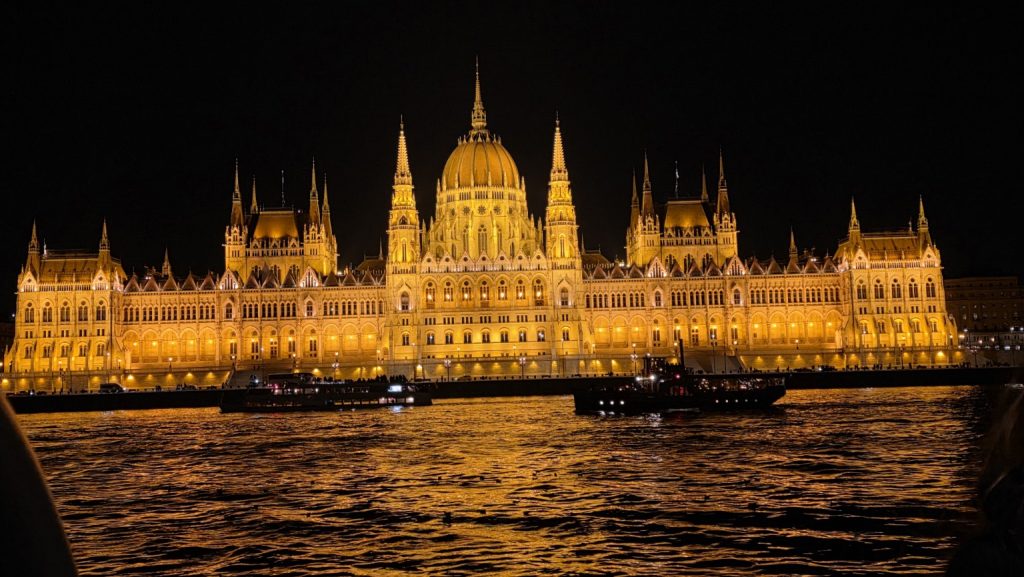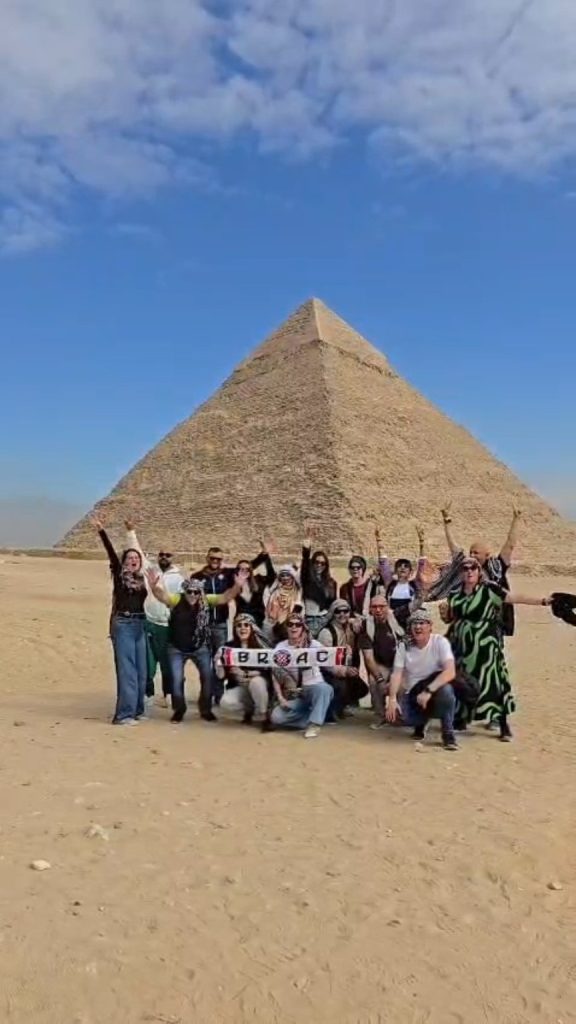
Almost nine hours on the road from Hurghada, from night until morning, would have been a perfectly good excuse for exhaustion. Our group had other plans. As soon as we arrived, we boarded a boat for a short Nile cruise. There was laughter, fun and singing — the kind of good spirits that turn a demanding excursion into a day you will talk about for years. We entered Cairo in song.
Ahead lay the pyramids of Giza, the Great Sphinx and the Grand Egyptian Museum: three great reasons to visit Egypt, each deserving far more time than a day trip allows. Yet with cheerful companions, neither a long journey nor an ambitious programme need become a burden. The important thing is to leave room to enjoy the day alongside everything you hope to see.
Morning on the River That Sustained a Civilisation
The short Nile cruise was a good way to get moving after the coach and feel the city around us. While we sang and enjoyed ourselves, modern Cairo surrounded us: enormous, crowded and thoroughly alive. Before visiting the pharaohs, we should at least glimpse the city of today’s Egyptians.
The Nile is more than a pleasing backdrop. In ancient Egypt, it connected settlements and provinces, nourished fields and transported food, people and building materials. Later, standing before the pyramids, it is worth remembering the water you sailed on that morning. Part of the explanation for such construction lies in the organisation of river traffic, supplies and labour.
Fortunately, our task that morning was simpler: enjoy the cruise and save our good spirits for what followed.
Giza Is Alive with Activity
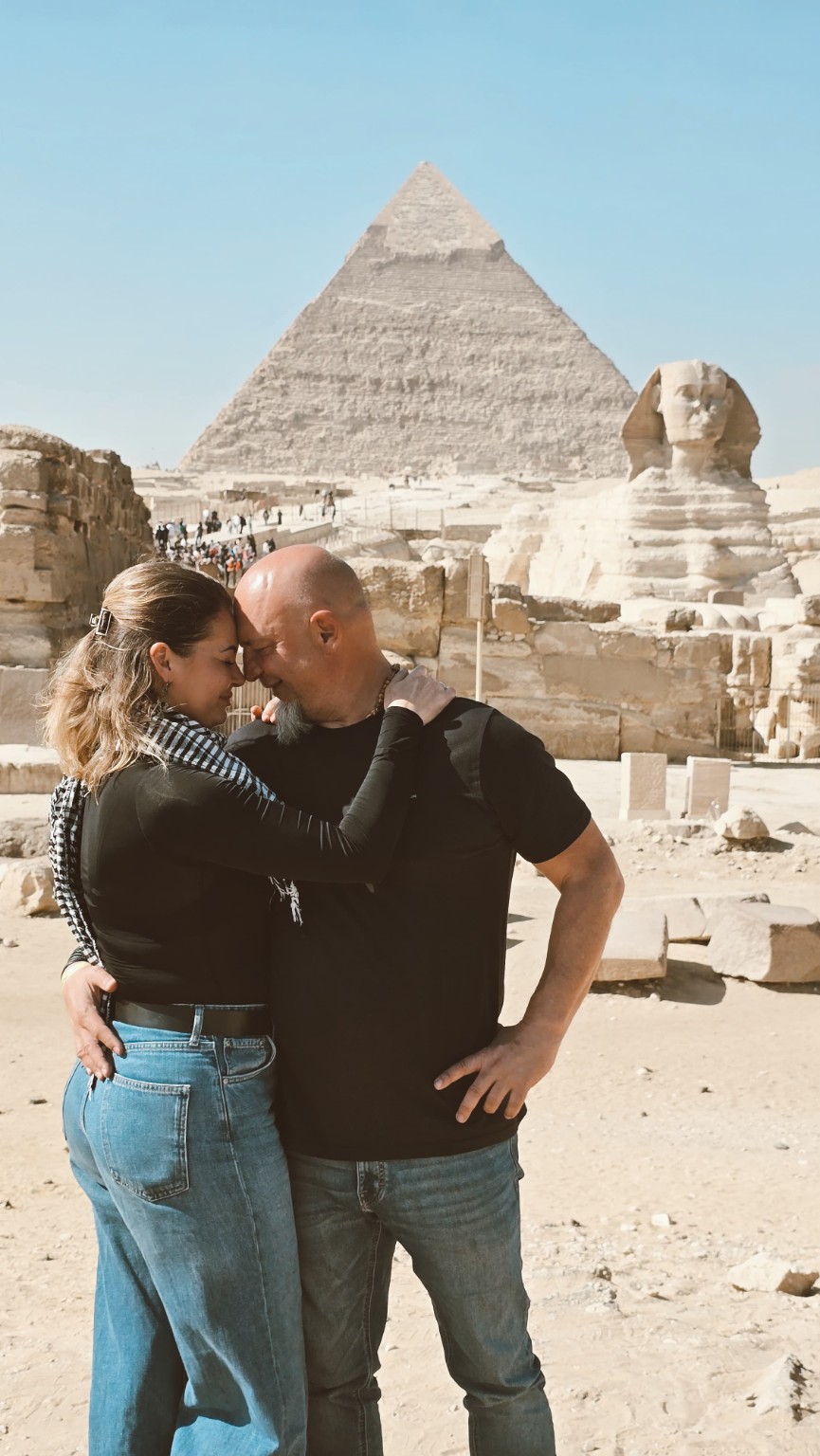
Photographs often make the pyramids seem isolated in desert silence. Giza in person has far more voices, movement and dust. Tourists, groups following guides, people seeking the right camera angle, camels and their handlers are everywhere. Everything happens at once beneath monuments four and a half thousand years old.
This is an intensely touristy place, and there is little point pretending otherwise. The bustle does not diminish its grandeur. Among people from across the world, you try to take in a pyramid and realise that none of the photographs prepared you for its scale. Approach the stone blocks, and the familiar silhouette becomes something entirely different.
We were accompanied by Mustafa, a Croatian-speaking guide. He helped us connect what we saw with the site’s history. That matters especially at Giza: three great pyramids dominate the view, but around them lies a whole world of temples, smaller pyramids, causeways and tombs.
Three Kings and the Great State behind Them
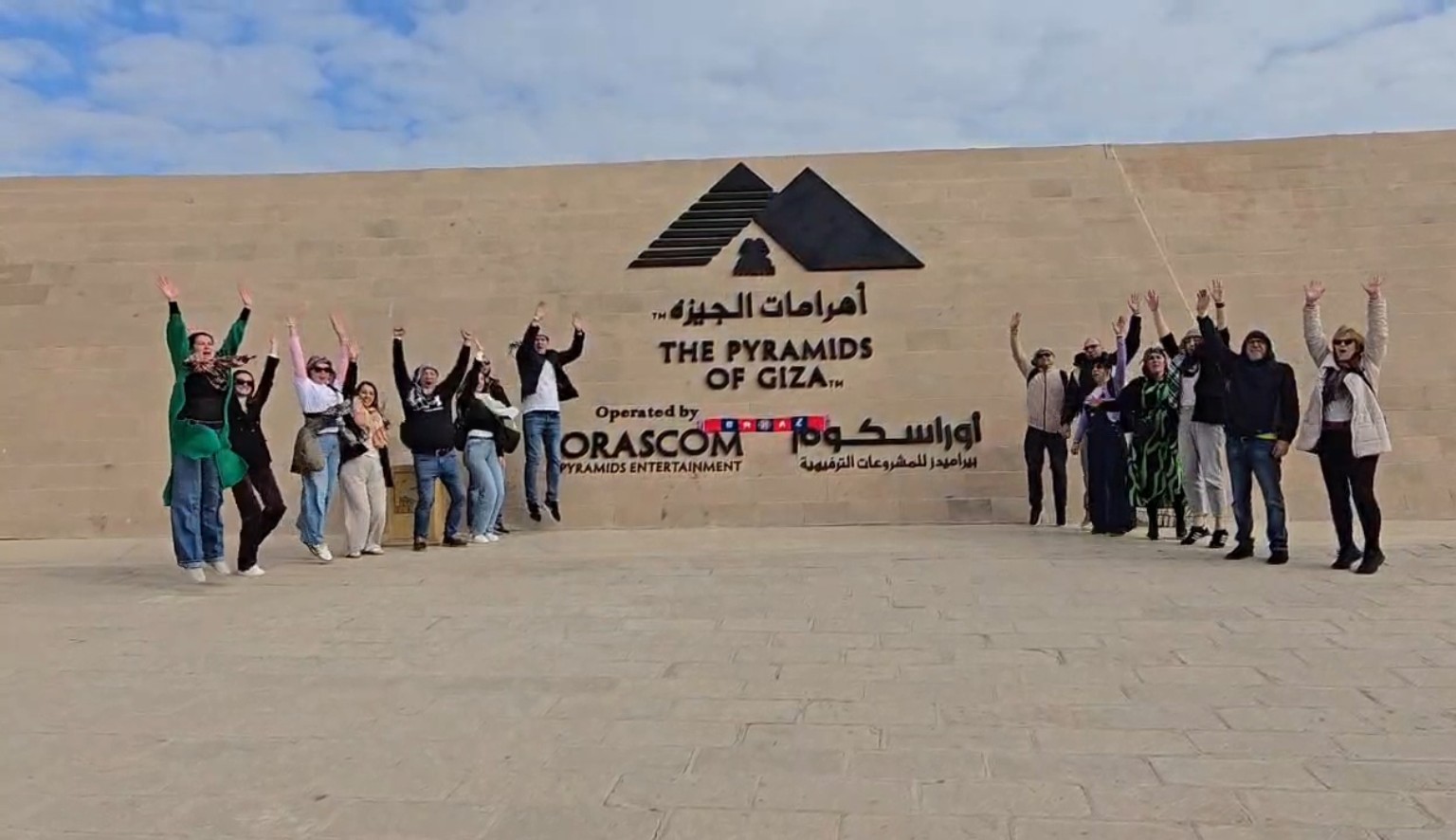
The principal pyramids belong to the Fourth Dynasty of the Old Kingdom, in the third millennium BC. Khufu, also known by the Greek name Cheops, commissioned the largest. The second belongs to Khafre, or Chephren, and the third to Menkaure, or Mykerinos. Their Greek names remain familiar, although the monuments long predate Greek rule in Egypt.
Giza was a royal necropolis and an expression of state organisation. Royal relatives and senior officials were buried alongside the rulers. Their tombs, often rectangular structures called mastabas, show that these were more than three isolated royal ambitions. A complex landscape of power, service and belief grew around them.
The building knowledge did not emerge overnight. Khufu’s project followed great works by his predecessor Sneferu, notably the Bent and Red Pyramids at Dahshur. The Bent Pyramid’s changing slope visibly records an adjustment to the design. Behind ideal geometry lay practical construction problems, experience and decisions made by people who had to solve them.
Khufu’s Pyramid Up Close
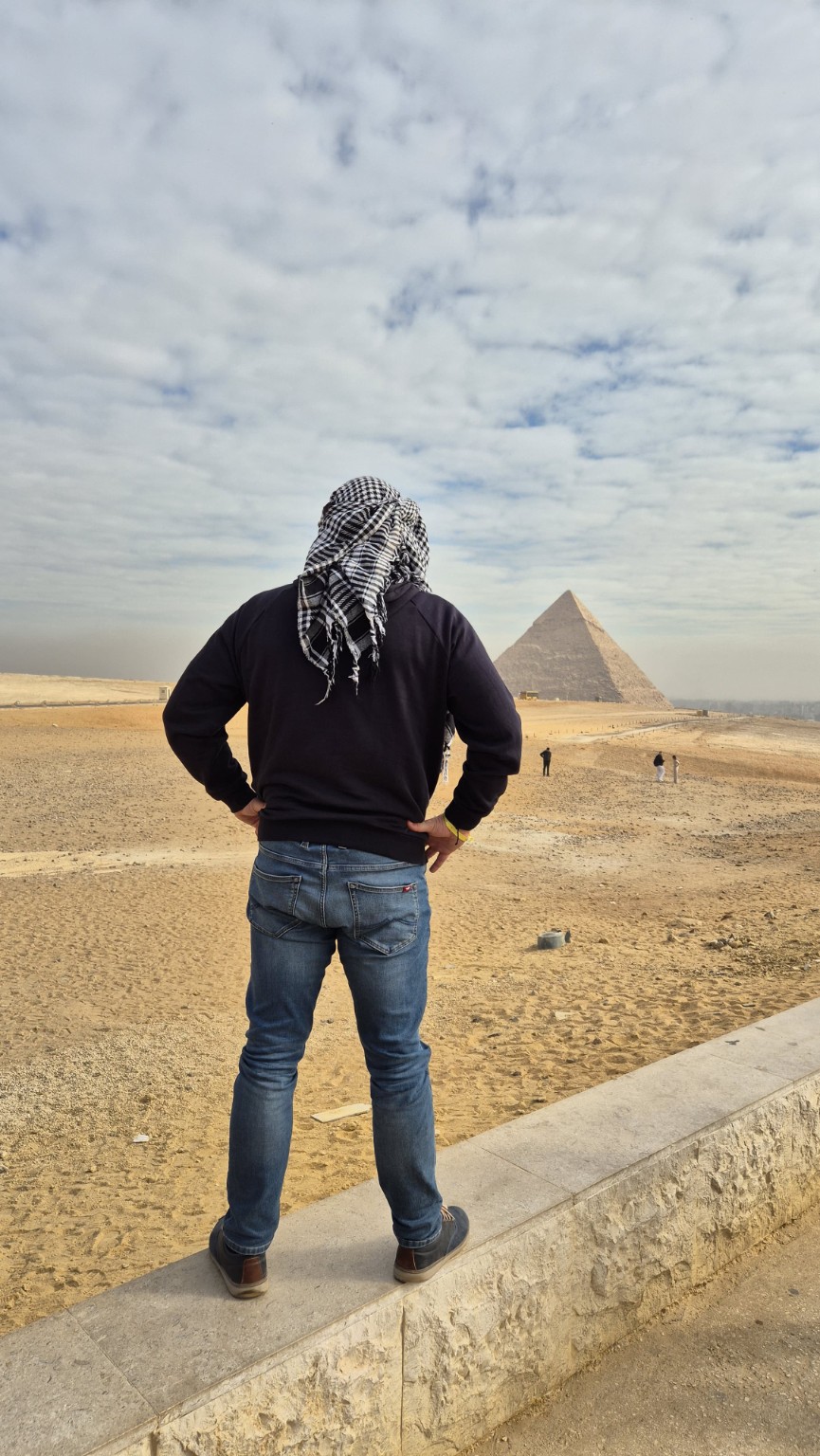
The Great Pyramid originally stood approximately 146.5 metres high. For centuries — indeed millennia — it was humanity’s tallest structure; today it is the only surviving Wonder of the ancient Seven Wonders. Its present appearance differs from the original: most smooth outer casing and the apex are gone. Fine pale limestone from Tura, transported by boat, once clad its exterior.
Inside are passages and chambers at different levels. An ascending route through the Grand Gallery, an extraordinary achievement in ancient stone construction, leads to the King’s Chamber, where a stone sarcophagus remains. Those details describe the interior; our walk around the exterior already gave us plenty of reasons to keep looking up.
Close up, I thought less about the familiar triangle and more about labour. How many repetitions of the same heavy task produced this whole? How much food had to arrive, how many tools needed maintaining, how many people had to work together?
Archaeology provides increasingly concrete answers. At Heit el-Ghurab, south of the Sphinx, excavations uncovered workshops, bakeries and kitchens, stores, houses and administrative buildings. The construction site had its own daily life and supply system. Papyri from Wadi el-Jarf, including the diary of the supervisor Merer, further reveal organised crews delivering materials for Khufu’s project.
Khafre’s Height and Menkaure’s Granite
From some angles, Khafre’s Pyramid looks taller because it stands on higher ground. It originally reached approximately 143.5 metres. Some smooth limestone casing survives near the top, offering the clearest impression of the pyramids’ former appearance. Its complex included a mortuary temple beside the pyramid and a valley temple linked by a causeway.
Menkaure’s Pyramid, originally about sixty-five metres high, is the smallest. Size is not its only interest, however. Its lower casing used granite brought from Aswan, more than eight hundred kilometres away. Harder to work than limestone, and demanding to transport, it opens another perspective on the scale of construction. Menkaure died before completion; some granite blocks remained unsmoothed, and temples were finished in mud brick.
Beyond the facts, we need to understand the whole complex’s purpose. The pyramids were royal tombs within larger ritual landscapes. After burial, the funerary cult continued through offerings and rites sustaining the king’s afterlife. Their scale reflects a different relationship with death, kingship and eternity.
The Great Sphinx and Its Surroundings
The Sphinx delighted us. Amid tourists and the endless search for photographs, it retains an extraordinary presence. Its lion’s body and human head form one of the world’s most recognisable figures, but in person you first notice the setting: the cut rock, the monument’s body and its relationship with neighbouring buildings.
Carved from natural limestone, the Sphinx is generally attributed by Egyptologists to Khafre’s reign. A lion’s body with a royal head expressed the ruler’s strength. In the later New Kingdom it was also worshipped as Horemakhet, “Horus in the Horizon”, closely associated with solar beliefs.
The Sphinx Temple and nearby Valley Temple of Khafre also deserve attention. The latter used massive limestone blocks clad in granite, alabaster floors and monolithic granite pillars, with royal statues inside. Connecting the Sphinx with these spaces and the causeway to the pyramid transforms it from an isolated giant sculpture into part of a coherent royal complex.
Between its front paws stands the Dream Stele of Thutmose IV. Its inscription tells how the young prince fell asleep in the Sphinx’s shade and was promised kingship if he freed the monument from sand. The stele connects royal power with divine will, while revealing the site’s long life: the Sphinx was already ancient to pharaohs restoring it more than a thousand years after its creation.
A Backflip That Wasn’t on the Itinerary
Then something happened that no itinerary could have predicted. On the Great Pyramid itself, we saw IShowSpeed perform his signature backflip. One of the world’s best-known online creators, with around fifty-five million Instagram followers at the time, was there at the very moment of our visit. I captured the unexpected moment on video.
This is the beauty of travel you cannot order in advance. You come for a place you have read about, prepare for its history, and receive a wholly unexpected personal memory. The pyramid was no less magnificent. Our day simply gained another scene to retell. Alongside Mustafa, our cheerful group, tourists and camels remained this astonishing encounter.
A Museum That Deserves More than One Visit
Our final major stop was the Grand Egyptian Museum, or GEM. Here, “grand” deserves to be taken seriously. The entire complex covers approximately 500,000 square metres, or fifty hectares. That includes the building, outdoor areas and other facilities, rather than half a million square metres of galleries. The museum portion of the main building occupies roughly 92,000 square metres, alongside separate retail and hospitality areas.
Those figures explain my impression: a thorough visit would take days. In a few hours you can choose highlights and explore major sections, but scarcely claim to have “seen” the museum. If you want to stop, read, compare periods and examine objects carefully, a single collection can hold you much longer than expected.
After the journey from Hurghada, the cruise and Giza, that becomes especially apparent. Curiosity remains, but time and energy have limits. I would gladly return for the museum alone, without trying to squeeze it in after everything else.
Ramesses II Welcomes Visitors
The museum project developed over decades, to a design by Heneghan Peng, with its grand opening on 1 November 2025. Its ambition is to present ancient Egypt from prehistory to the Graeco-Roman era in a setting worthy of even the largest monuments.
The Grand Hall is dominated by a colossal statue of Ramesses II, weighing about eighty-three tonnes. It originally stood before the main temple of Ptah at Memphis. At the entrance, it already asks us to arrange our historical timeline: Ramesses belongs to the Nineteenth Dynasty of the New Kingdom, more than a thousand years after the principal pyramid builders.
The same area contains colossal statues of a Ptolemaic king and queen recovered underwater from the submerged city of Thonis-Heracleion, alongside Merneptah’s column and a seated Senusret I. The visit immediately moves between dynasties, cities and archaeological discoveries.
The Grand Staircase and Twelve Main Galleries
The Grand Staircase is more than a route to the galleries. Along it stand fifty-nine monumental objects: royal statues, stelae, columns, sarcophagi and architectural elements. The display explores royal imagery, temple construction and rulers’ relationships with the gods. It reveals how closely Egyptian art belonged to its original setting and the rituals it served.
The main displays occupy twelve galleries, following three connected themes: society, kingship and beliefs. They proceed chronologically from early communities through the Old, Middle and New Kingdoms to later periods. This is a major strength: “ancient Egypt” ceases to be a vague distant age in which all pharaohs seem neighbours.
Royal statues reveal how rulers wanted to appear; temple objects and divine images open a religious world; funerary equipment reveals preparations for the afterlife. Everyday objects remind us of people beyond palaces and temples who produced, traded, cooked, dressed and raised children. The museum connects these parts of society instead of reducing history to royal names.
Tutankhamun: Beyond the Golden Mask
A separate section is dedicated to Tutankhamun, with more than five thousand objects from his tomb. The number alone suggests the time serious viewing requires. Howard Carter and his team discovered KV62 in the Valley of the Kings in 1922, supported by Lord Carnarvon. Relatively small, it was nevertheless much more complete than most royal burials.
The Tutankhamun galleries explore the tomb’s discovery, the king’s identity and family, burial, daily life and beliefs about rebirth. Coffins, shrines, furniture, jewellery, clothing, chariots, weapons and other objects reveal his world. Together, the grave goods become an effort to provide protection, status and necessities for eternity.
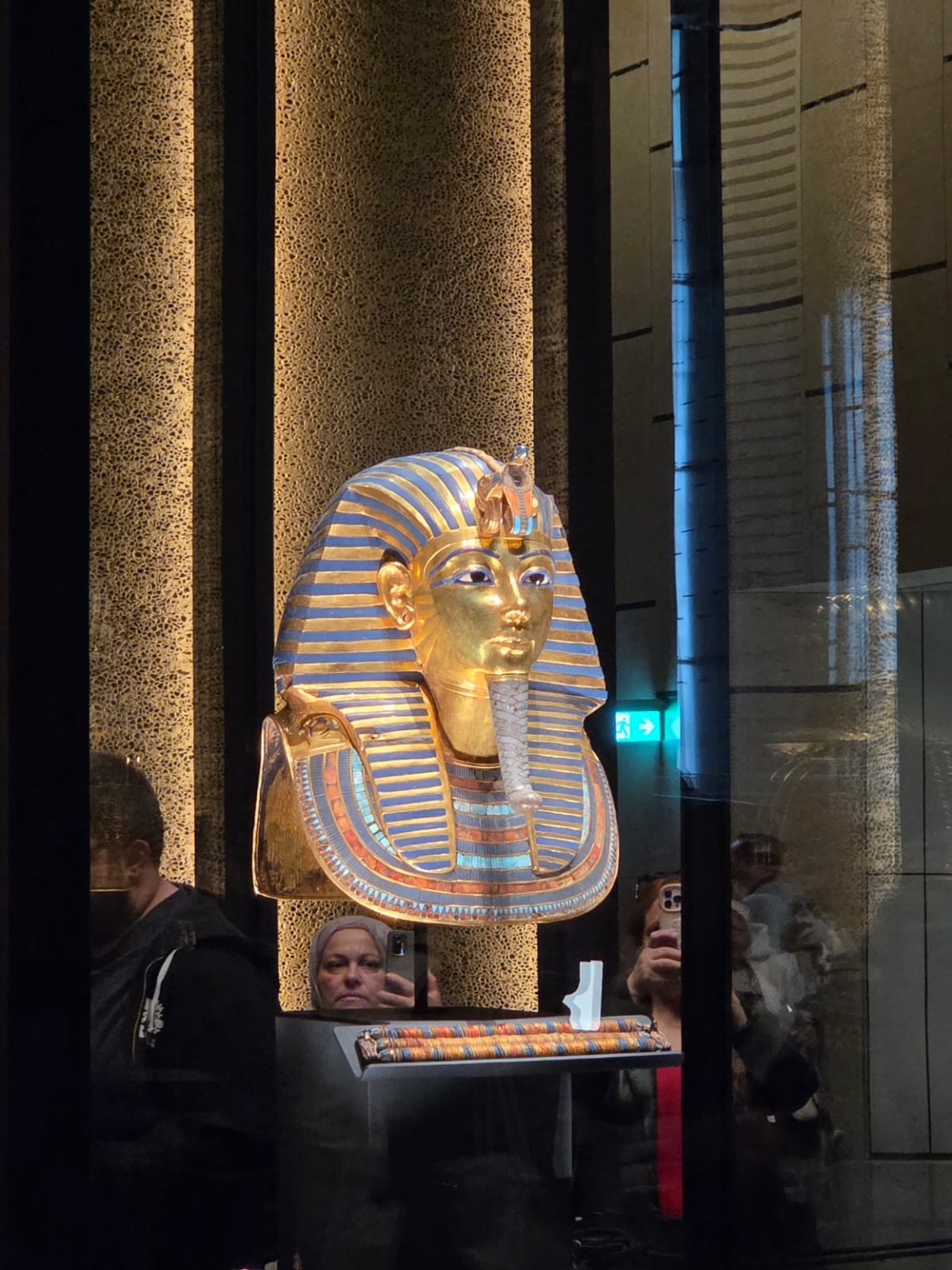
The gold funerary mask is the collection’s most familiar face, but its purpose also matters. It covered the mummified king’s head and shoulders with an idealised image associated with the gods. Gold evoked the sun god Ra, while the king’s afterlife was linked with Osiris. A protective inscription on the back identifies parts of the mask with different deities. Its superb craftsmanship and beauty served a precise religious purpose.
Khufu’s Boats and a Reason to Return
The complex also includes Khufu’s boats, directly connecting the museum with the pyramid we visited. In 1954, sealed pits containing dismantled wooden vessels were discovered beside its southern side. The first boat was reconstructed and displayed beside the pyramid for many years, before moving to GEM in 2021. The second was also excavated, conserved and transported to the museum, where its reconstruction forms a story of its own.
The boats raise questions about royal funerals, ritual sailing and imagined journeys after death. They are also remarkable evidence of woodworking and shipbuilding. After so much stone at Giza, wooden remains from the same royal world change our view of its builders.
That is why it is difficult to leave such a museum feeling finished. Another gallery, object or whole period always invites a return. Our day had already been full: an overnight journey, a cheerful cruise, Mustafa, immense monuments amid tourist bustle and an unexpected backflip on a pyramid. At the end awaited a place demanding several more days of its own. For me, that may be the best reason to return.