The seventh and final instalment of Seven Days in Morocco. After travelling from Merzouga through the cedar forests to Fez, we enter the medina.
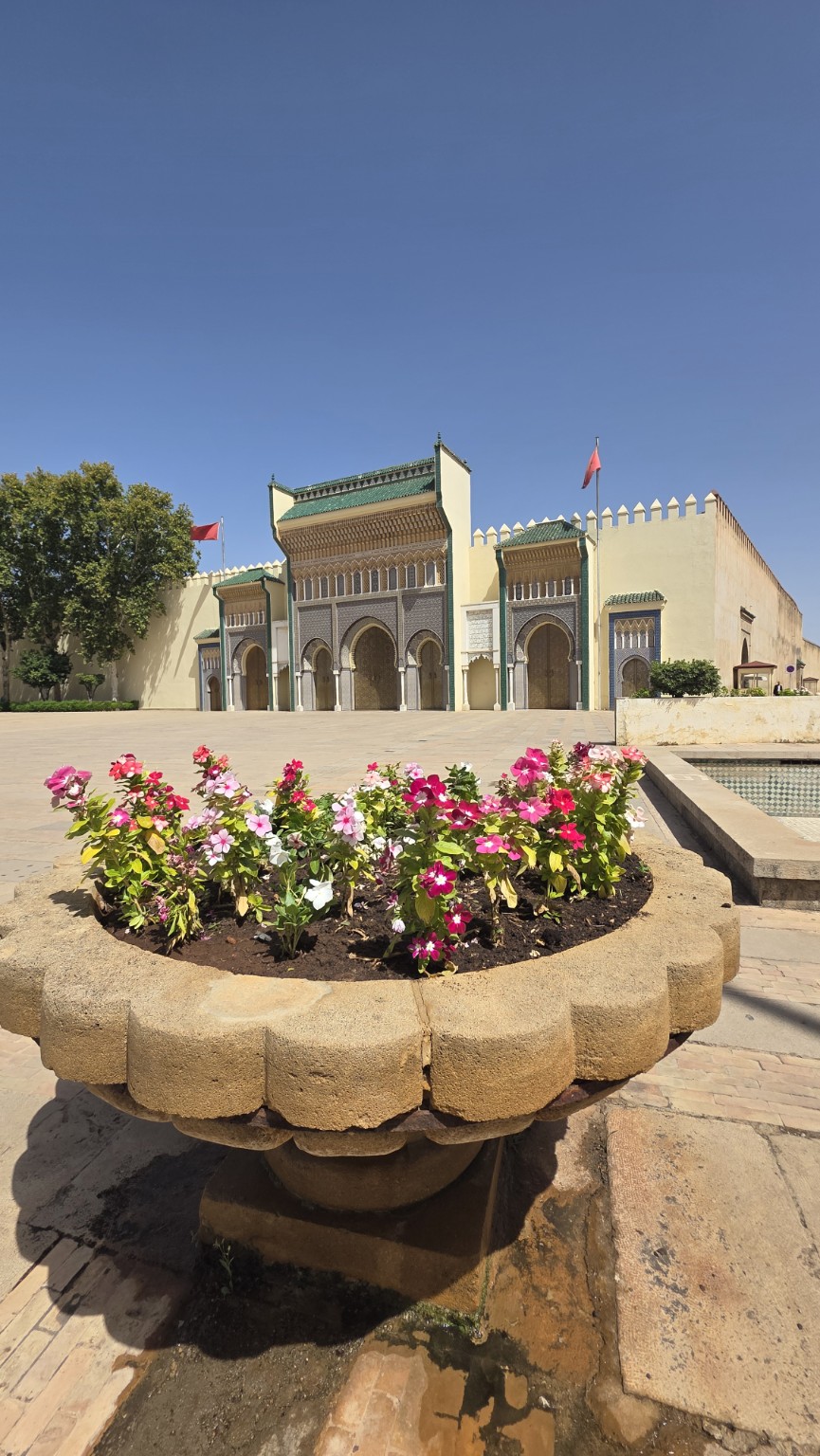
Outside the Royal Palace in Fez, everything is still easy to take in: an open space, richly decorated entrances and room to step back for a photograph. We began our visit here with Muhamed, a superb guide to history who made buildings more than attractive façades. Yet when I think of Fez now, the palace is not the first image that returns. I remember a narrow lane where I no longer knew where I was, the sound of copper being hammered and a young man who gave me bread. I could hardly have wished for a better story to end my Moroccan journey.
Fez from Outside, before the Medina Swallows Us
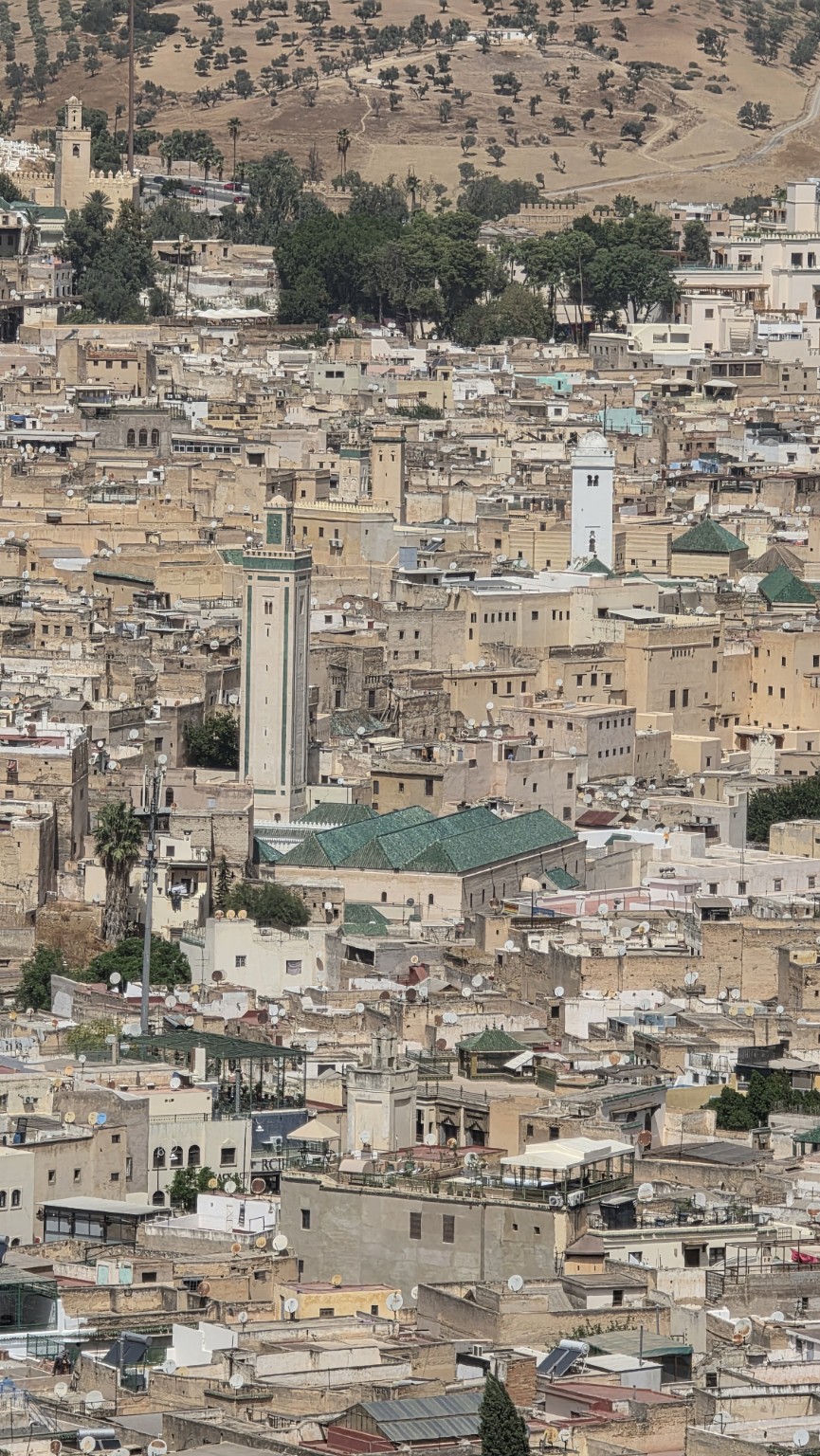
The palace belongs to Fes el-Jdid, the historic “new Fez”, outside the oldest medina, Fes el-Bali. Impressive as its gates are, they are only a beginning. We also visited a fortress above Fez. From such a place, the city’s dense weave becomes clearest: roof beside roof, wall beside wall, punctuated by minarets and green rooftops. From above, you try to imagine the streets connecting it all. Only later do you understand how difficult it is to connect them in your own mind.
A few figures help convey its scale. The UNESCO-listed historic property covers 280 hectares, or 2.8 square kilometres: 220 hectares in Fes el-Bali and 60 in Fes el-Jdid. Population figures require a distinction between the old urban fabric and administrative boundaries: the Fès-Médina district had 49,775 residents in the 2024 census. This is an entire world of daily life, families, workshops and shops, joined during the day by workers, customers and visitors. The medina is not a set you enter after buying a ticket. People live here.
The Moment I Put Google Maps Away
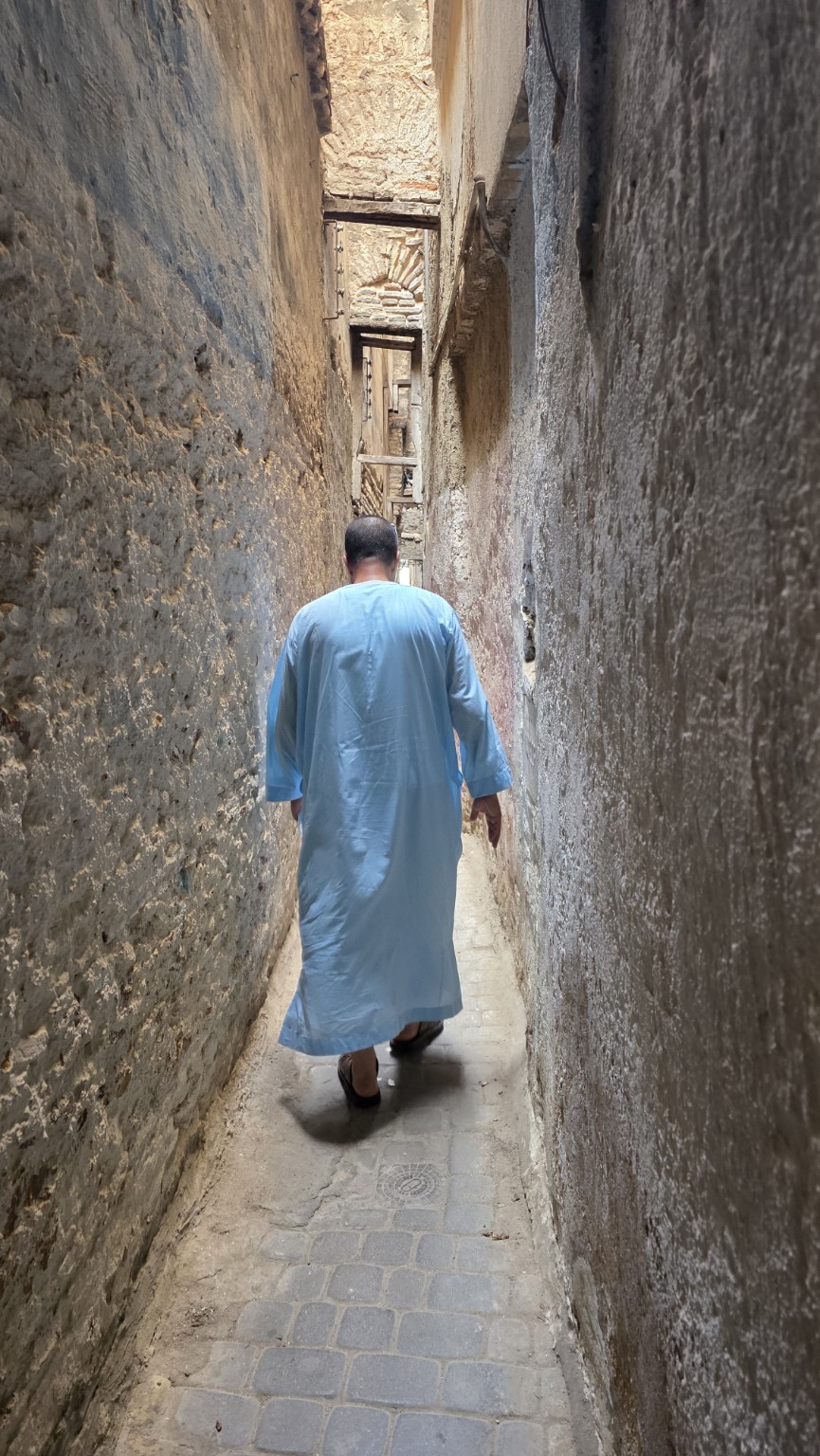
For me, the real Fez began when we entered the medina. Some lanes are so narrow that you wonder how all this life fits into them. Someone carries goods, someone stops outside a shop, someone tries to pass, and you press against a wall and wait your turn. Your eyes keep moving towards doorways, displayed objects, openings overhead and another bend. Muhamed knew where we were going and what we were seeing. I tried to remember the route, then soon abandoned that ambition.
I also tried navigating with Google Maps. I watched the screen, compared it with the passages ahead and tried to identify the next turning. Then I put my phone away and simply got lost. I admit that does not particularly trouble me. I enjoy the moment when I stop walking only towards a destination and begin noticing what lies along the way. Still, the medina has its own logic. Street-name plaques can offer a clue: square or rectangular ones usually mark through streets, while hexagonal ones are often associated with dead-end lanes, or derbs. A useful little signpost, although for a first encounter with Fez I would still choose Muhamed over my own interpretation of the plaques.
Seffarine – The Square You Hear before You See It
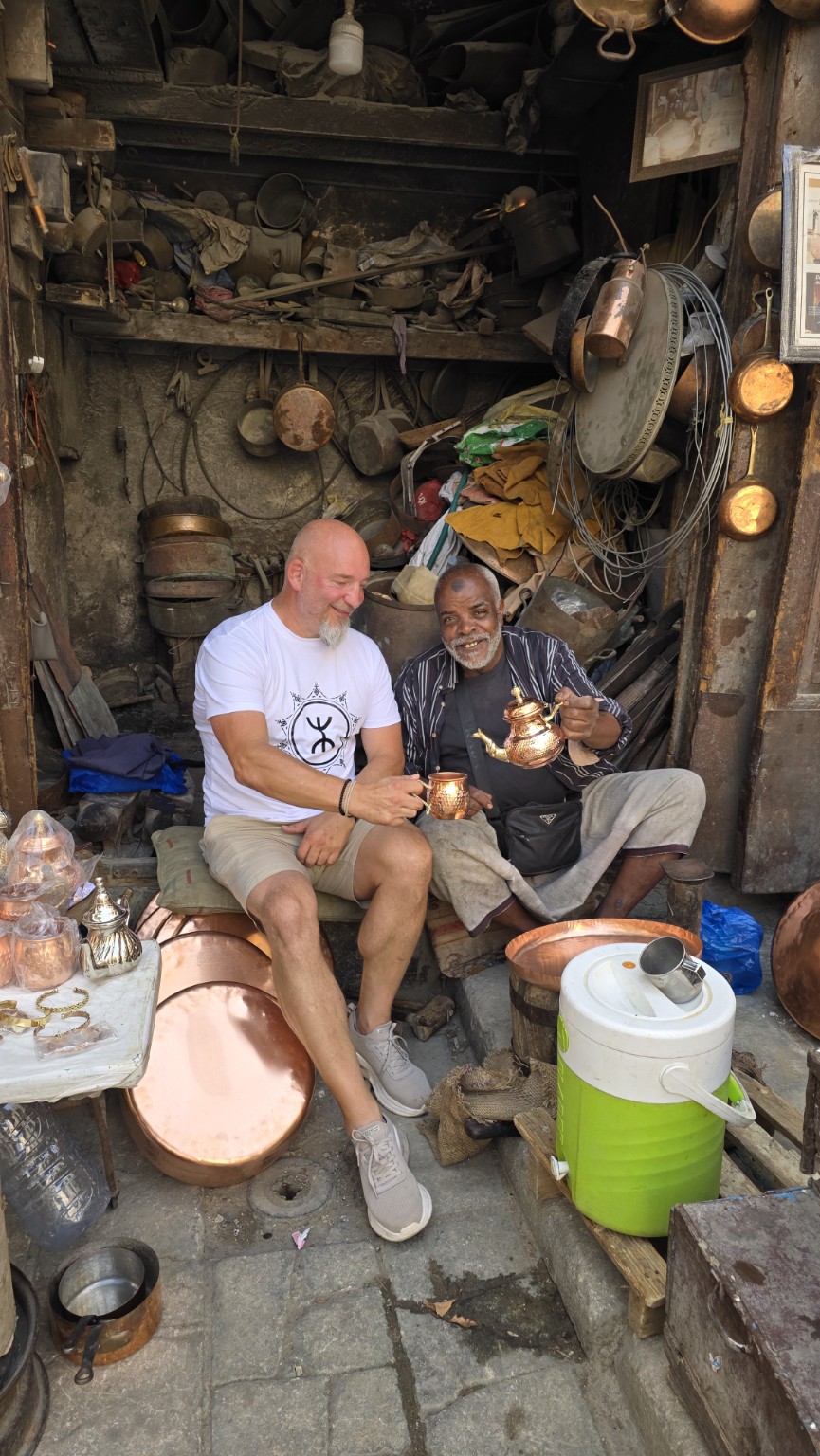
Seffarine Square has a sound of its own. Craftsmen work copper here, and hammer blows accompany you towards the workshops. Narrow passages open onto pots, trays and teapots, objects containing hours of work and years of experience. It is one of those scenes that suddenly makes a city’s history comprehensible. Simply watch a craftsman’s hands. Their assurance reveals how long he has known the material before him.
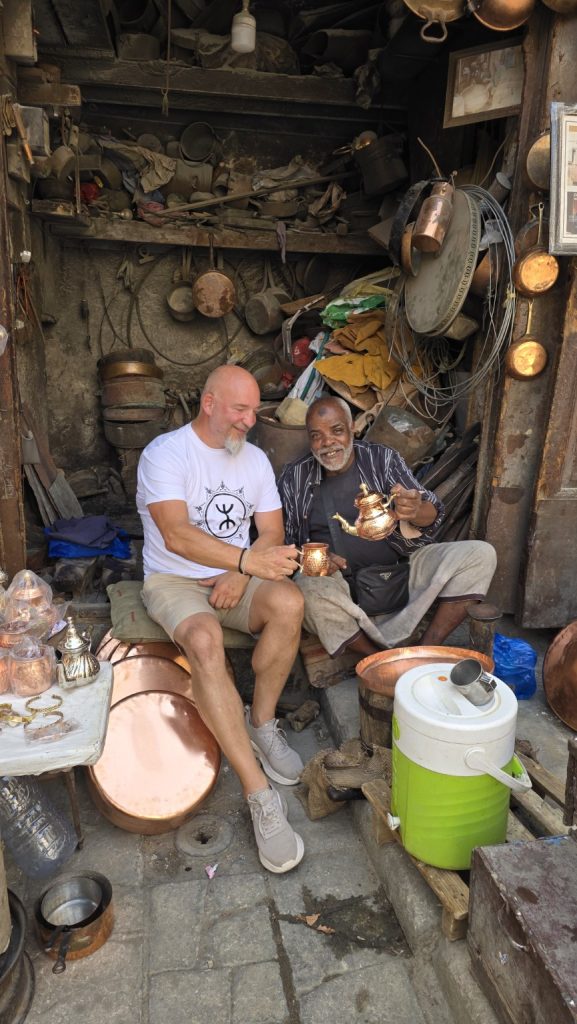
Here I met Hamid, a familiar figure on the square. He has been on Seffarine since boyhood, his life bound to copper and workshops for almost as long as he can remember. I sat beside him among pots and tools, and the photograph remains one of my favourites from Fez. People like him give a city a face. After meeting Hamid, you remember more than the square’s name or craft; you remember someone you will look for if you return.
Hides, Vats and the Hard Work behind the Familiar Photograph
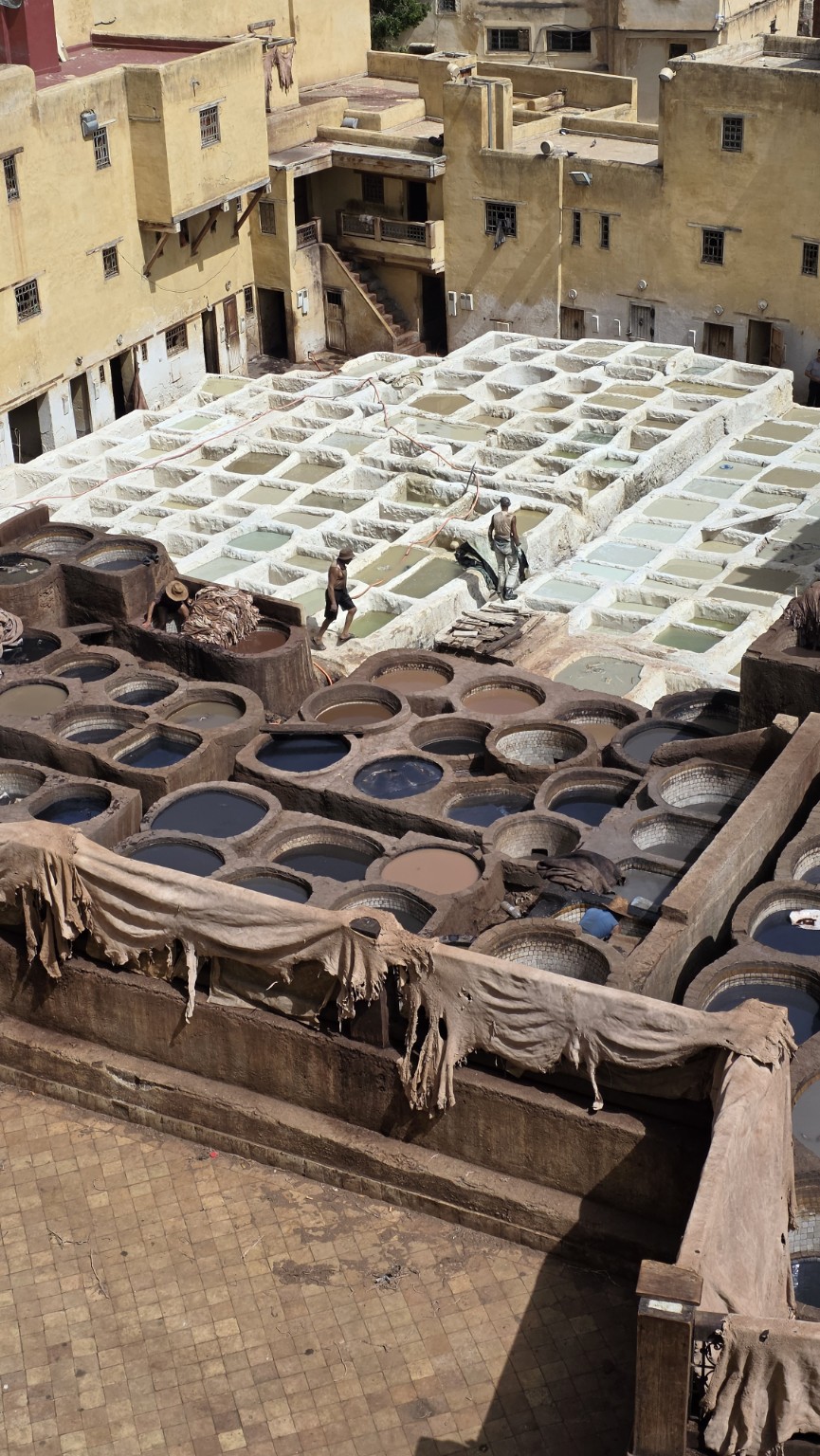
The tannery offered a very different experience. From above, rows of vats open into view, some pale, others dark, crowded between buildings. People work with hides while moving along the narrow edges. A photograph attracts the eye with shapes and colours, but pause and you begin following the work itself. Behind the products later displayed in shops lie water, treatment, soaking, dyeing and considerable physical labour.
The demonstration of the process was excellent. I like being shown how something is made, connecting a finished object with its material and the hands that shaped it. In Fez, this happens from workshop to workshop. With copper, you listen to the hammer; here, you watch vats and hides. Gradually, you get to know the city through the people working in it.
A City Where You Eat Well
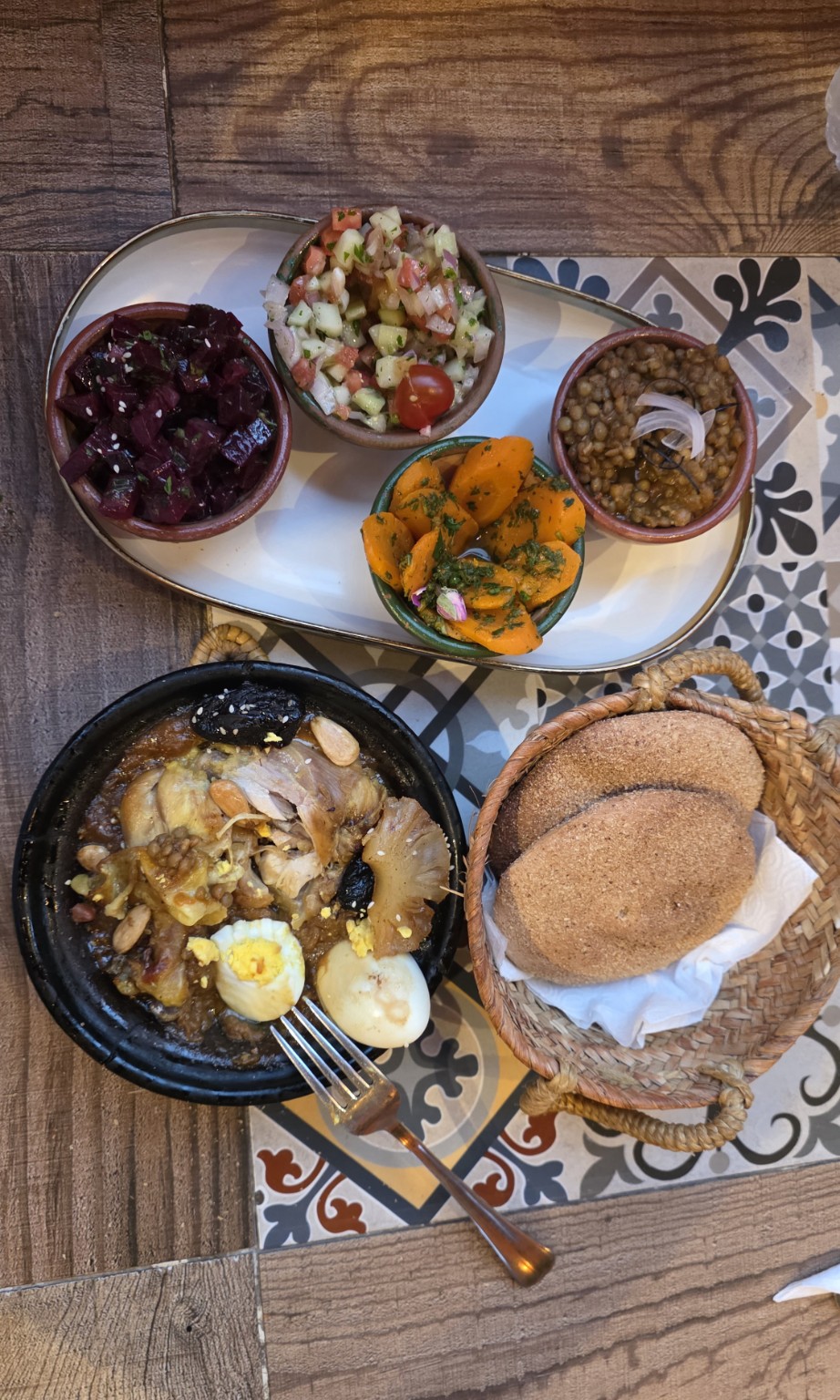
The food in Fez was fantastic. Tagines, bread and small bowls of side dishes turn lunch into a welcome pause after walking. My table held salads, lentils, carrots, beetroot and a slowly cooked dish, enough to make me briefly forget how many lanes I had crossed. Moroccan cooking accompanied the whole journey, and here even a walk through the market kept bringing my appetite back.
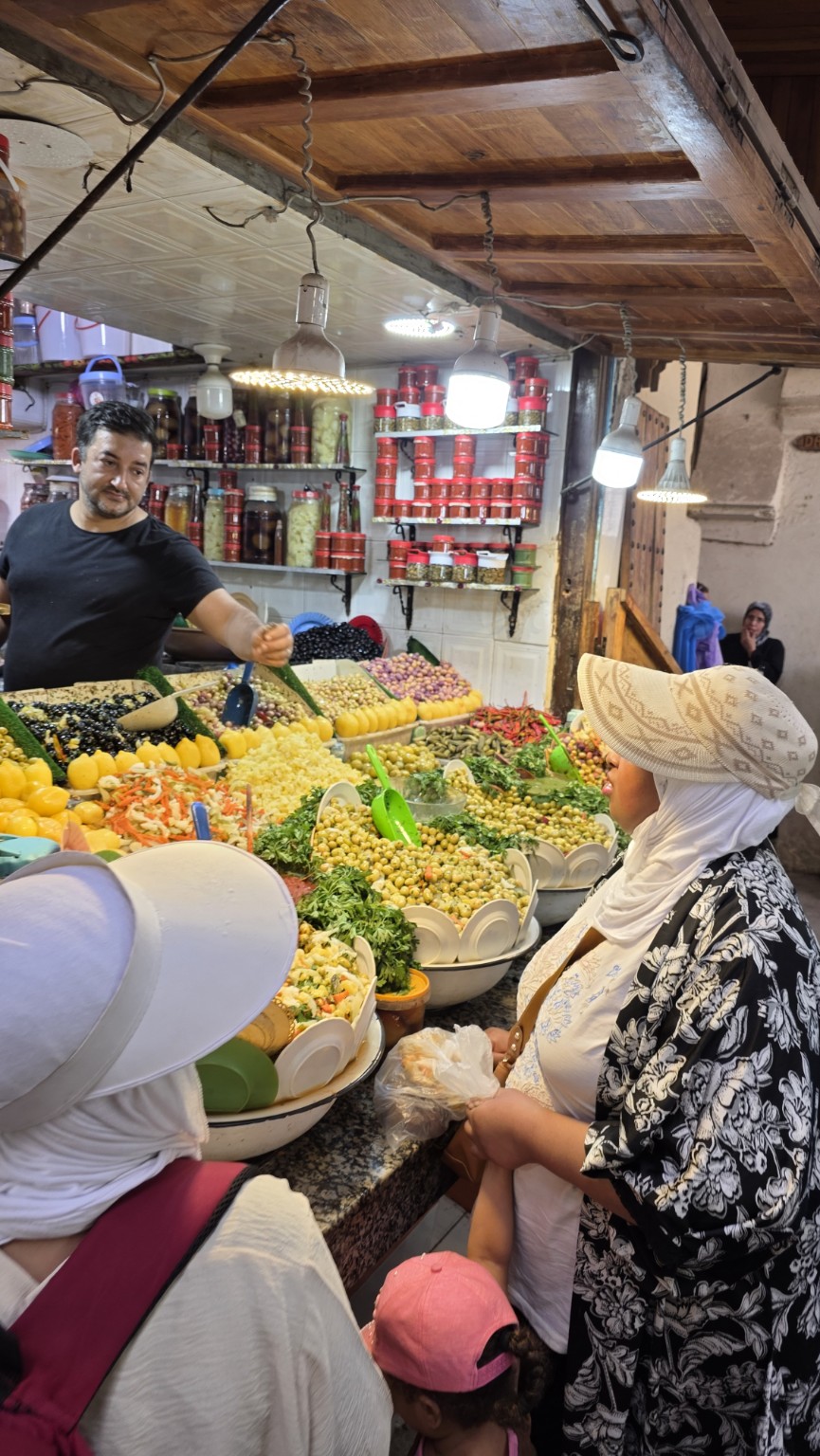
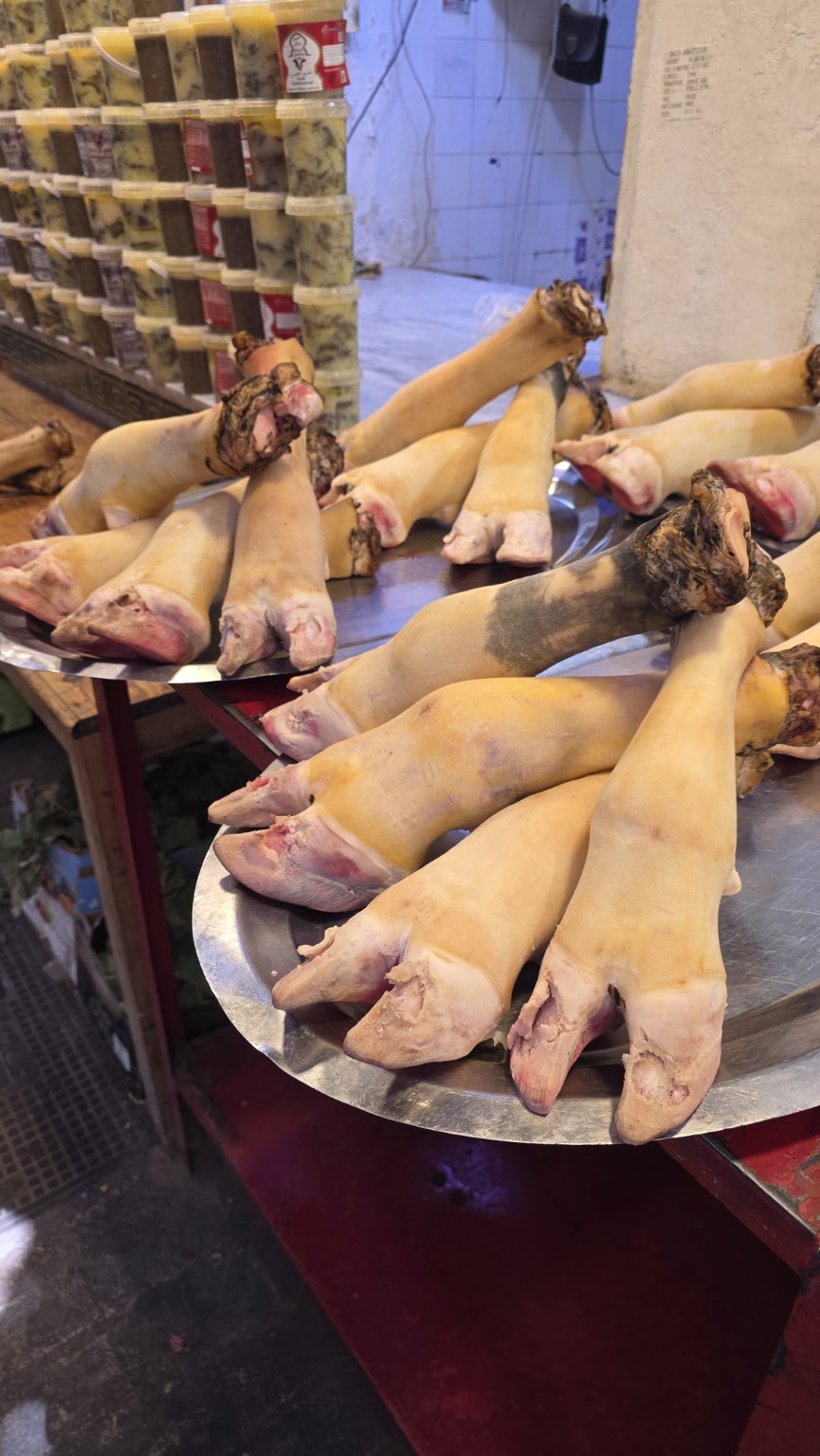
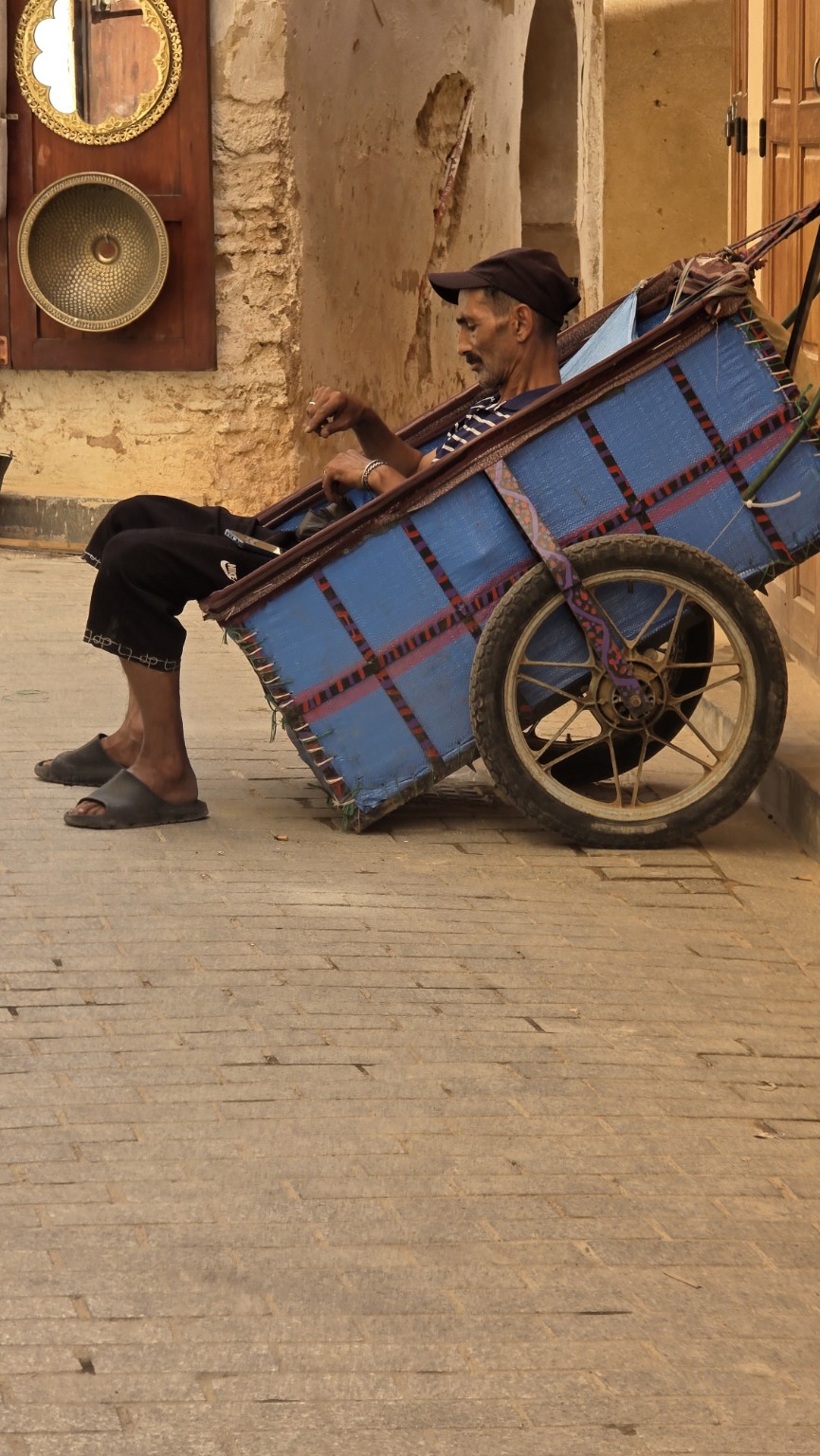
Stalls are piled with olives, lemons and pickled vegetables, while butchers a few steps away reveal another side of the same daily life. Everything is close, exposed and alive. Handcarts move between shops, and someone even finds space in one for a short rest. It is easy to keep searching for the next landmark in the medina. I found these scenes just as interesting: a purchase, a worker’s break, conversation across a counter, a city in the middle of an ordinary day.
The Bread I Did Not Buy
Beside a communal bread oven, I saw a particularly interesting custom. Residents knead dough at home, bring it for baking and leave it with the man working at the oven. Later, they collect their baked loaves. Such communal ovens, or ferrans, form part of life in Moroccan neighbourhoods. I stood watching with curiosity. I have no photograph of the scene, but remember it clearly.
A young man noticed my curiosity. When he collected his bread, he offered it to me, saying, “Here you are, a gift from us.” I had asked for nothing. I had simply stopped, interested in their work, and he chose to share what he had come to collect. That simple gesture moved me. After palaces, desert dunes, mountains and long drives, I ended the journey holding a gift of bread.
The Morocco I Carry Home
I experienced Morocco as an exceptionally hospitable country. Of course, medinas require attention, and there are lanes I would not enter without knowing the area. My fondness for wandering does not mean every passage is a good choice at any hour. With people who know the city, the experience becomes much more relaxed and rewarding. I especially want to mention my friend, brother and guide Mustafa, who organised the entire journey. His knowledge of the country and its people helped me feel safe and open to the encounters that give travel meaning. In Fez, Muhamed’s knowledge helped us understand the city we had entered.
This concludes my Moroccan series. I carry home the view of Fez from the fortress, narrow passages, Hamid’s workshop and the taste of lunch after walking. But when someone asks what people in Morocco are like, I know which story I will tell: the young man who came for his bread and shared it with a curious stranger. I lost my way in the medina. Beside that oven, I found the reason I wanted to share the whole journey with others.
Area figures: UNESCO, Medina of Fez. The population figure refers to the administrative Fès-Médina district in the 2024 HCP census; its boundaries differ from those of the UNESCO property.