Seven Days in Morocco — Part Five: Sunset, Night and Morning among the Dunes of Erg Chebbi
Before sunrise, I left the camp barefoot. Wearing a tunic and a scarf around my head, I walked straight towards the dunes, to our hosts’ surprise. I wanted to walk and watch the desert wake. After all the roads, cities and stops, a sandy slope ahead was enough: cross it and see what opened beyond. I walked over several dunes, leaving footprints I knew would not last long. That morning remains one of my favourite moments of the whole Moroccan journey.
Before the morning came the evening: arrival from Merzouga, a camp beside the first dunes of Erg Chebbi, camels waiting and the sunset that drew us into the sand.
Where We Continue by Camel
After meeting a nomadic family, exploring the rocky landscape and hearing music in Khamlia, we reached the desert camp. Beautifully arranged and comfortably equipped, it stood so close to the dunes that sand immediately claimed the view. I knew I would struggle to remain seated with all that space before me.
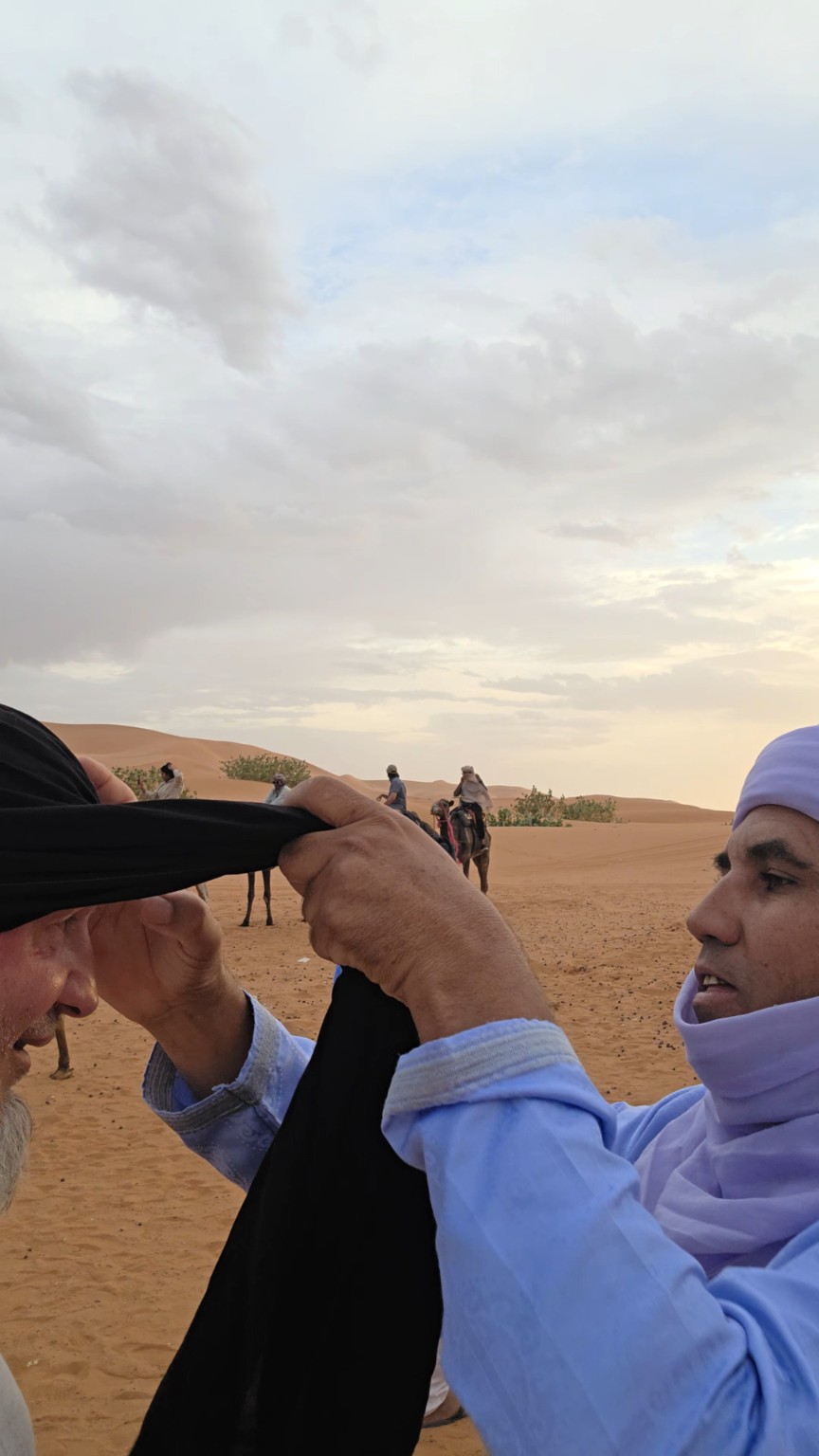
For our sunset outing, we continued by camel. From that point, they were our transport, while the guides took charge of the route. First we adjusted scarves, prepared ourselves and trusted the people for whom moving through this landscape was everyday work.
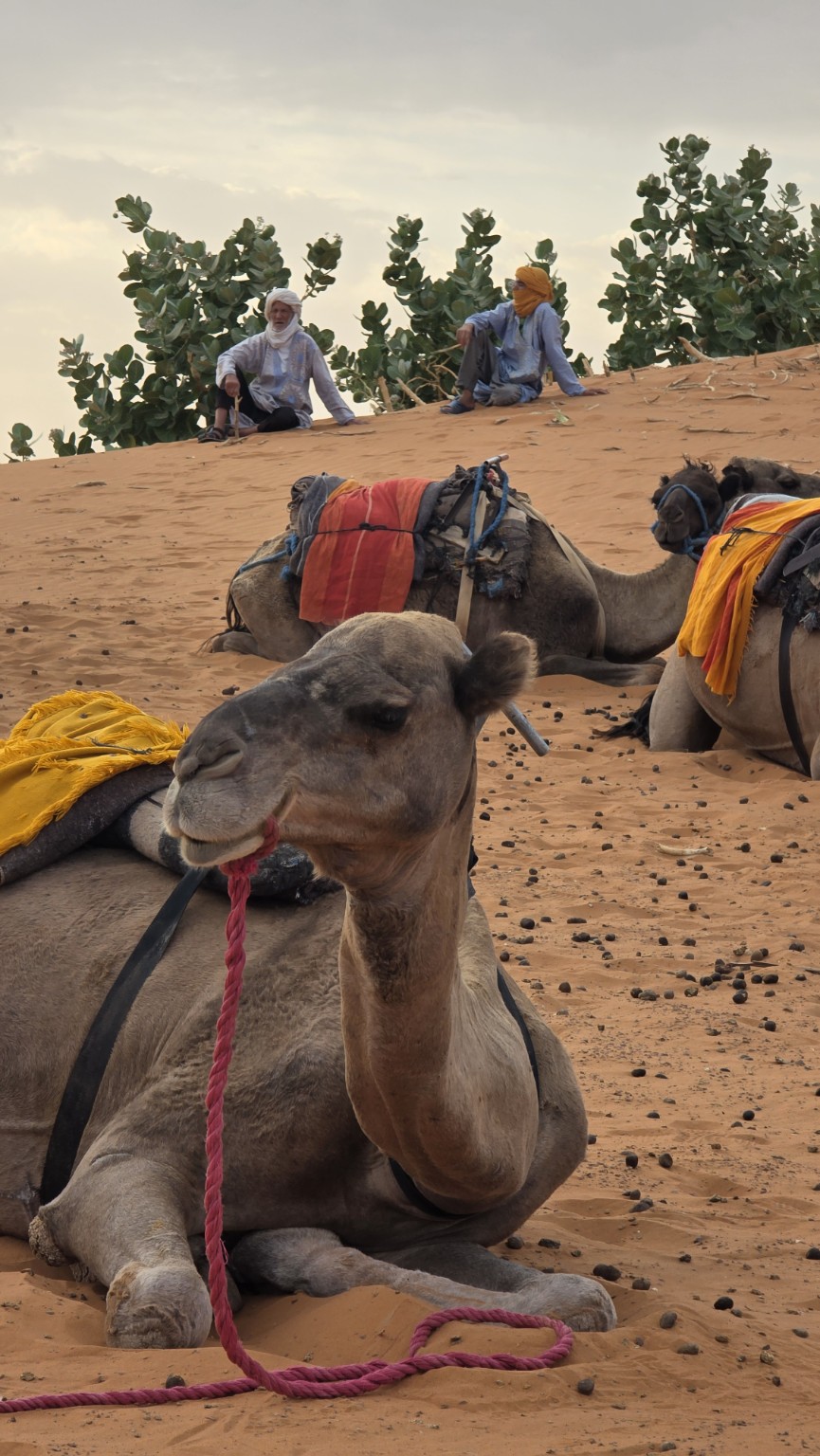
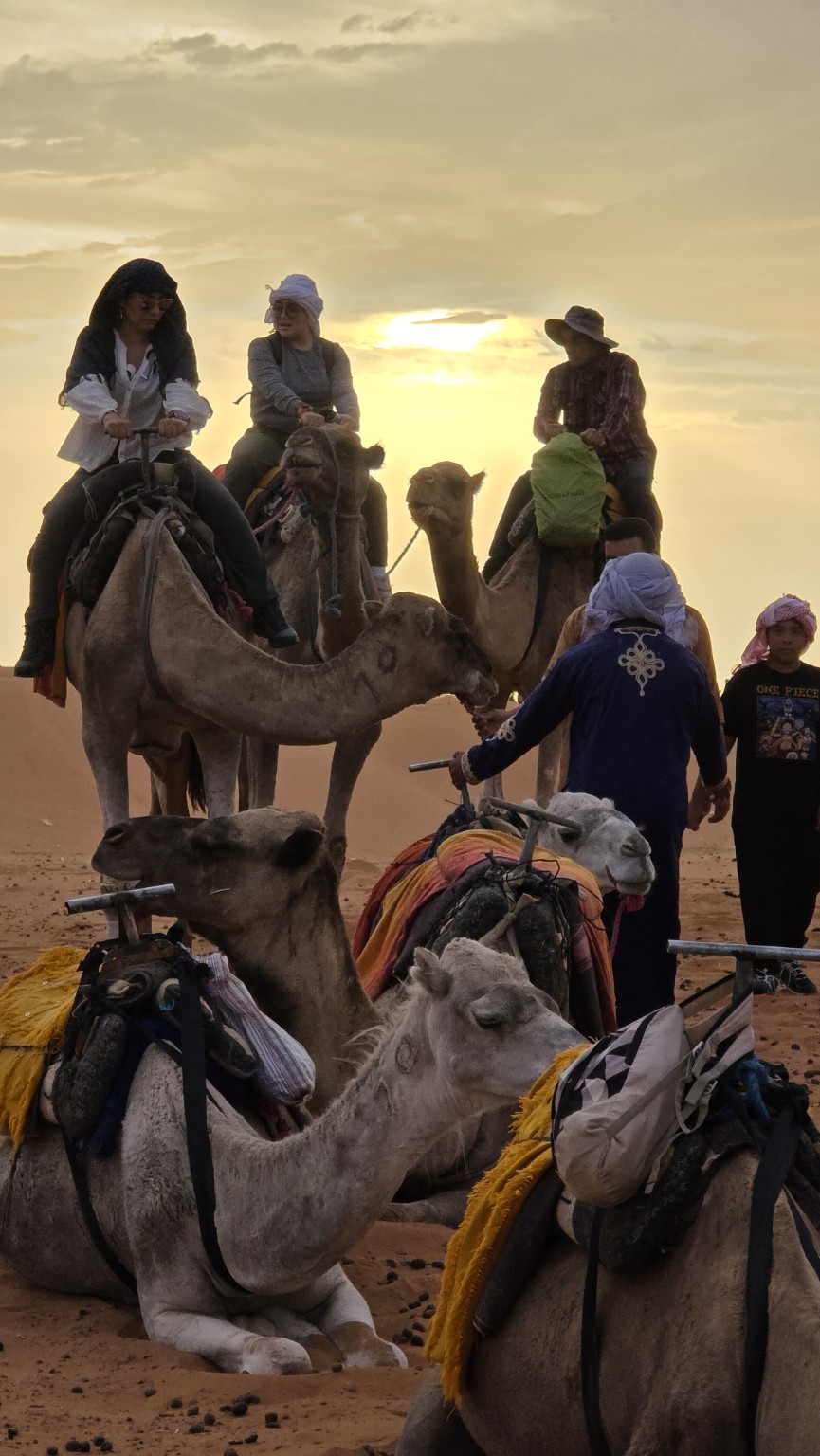
The camels waited kneeling on the sand, colourful blankets covering their saddles. Guides and travellers stood around them; some people were already seated, others still arranging belongings. Departures like this always involve a few minutes of everyone preparing at a different pace before the group finally moves.
The view changes from a camel’s back. Its movement has a rhythm to get used to, while the sand beneath continually changes: a flatter stretch, a climb, a ridge, another slope. In a city, doors, signs and passers-by attract attention. Here, I found myself watching light and the edges of dunes.
A Sunset in No Hurry
We went to watch the sunset together, with guides and other travellers. In the photograph, the sun breaks beneath clouds behind us and the camels. People are still settling, talking and looking where to go. I like that the frame retains a little travel bustle. Encounters with grand sights often begin ordinarily, while finding a position and making sure nothing falls out of your hands.
As the sun sank, I felt less and less need to go anywhere else. Among dunes, you can find yourself watching almost the same scene for a long time. A colour shifts, a shadow lengthens, a cloud opens a narrow passage for light, and suddenly something different lies before you. There is no need to visit many places. Staying is enough.
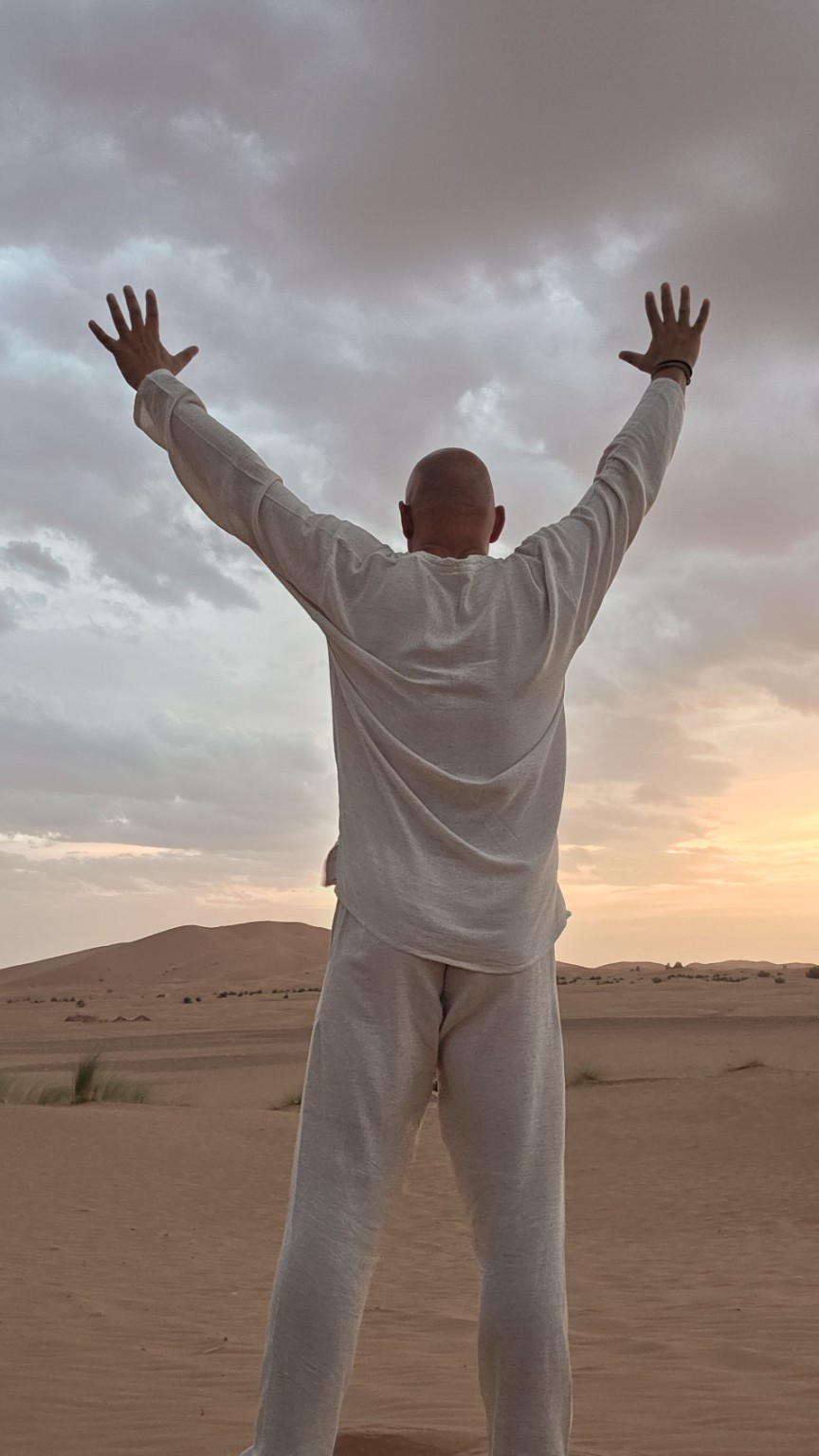
In one photograph, I face the desert with my arms raised. Looking at it, that gesture best conveys what I felt: gratitude for arriving, for being there and for a moment when nobody asked anything of me.
Camp Lights and Evening Music
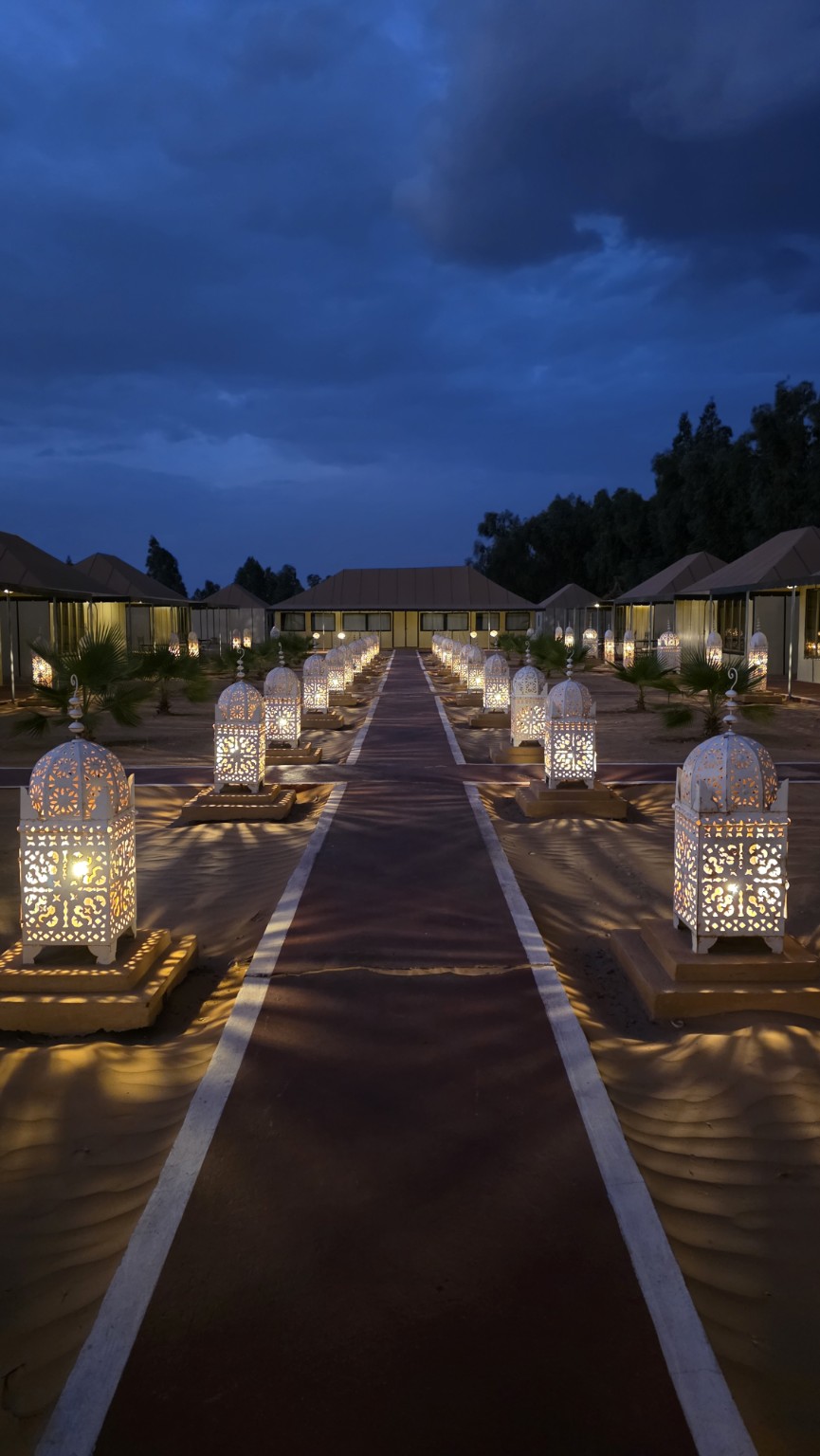
In the evening, lamps light the path between the camp’s tents. Their cut-out patterns cast light onto the sand while the sky darkens behind them. After the open dunes, that carefully arranged passage feels wonderfully welcoming. There is somewhere to return, put down your belongings and sit.
Our hosts also organised Gnawa music that evening. After meeting the musicians in Khamlia, rhythm became part of the day again, this time at camp. It was lovely listening while knowing the dunes continued just beyond the illuminated space.
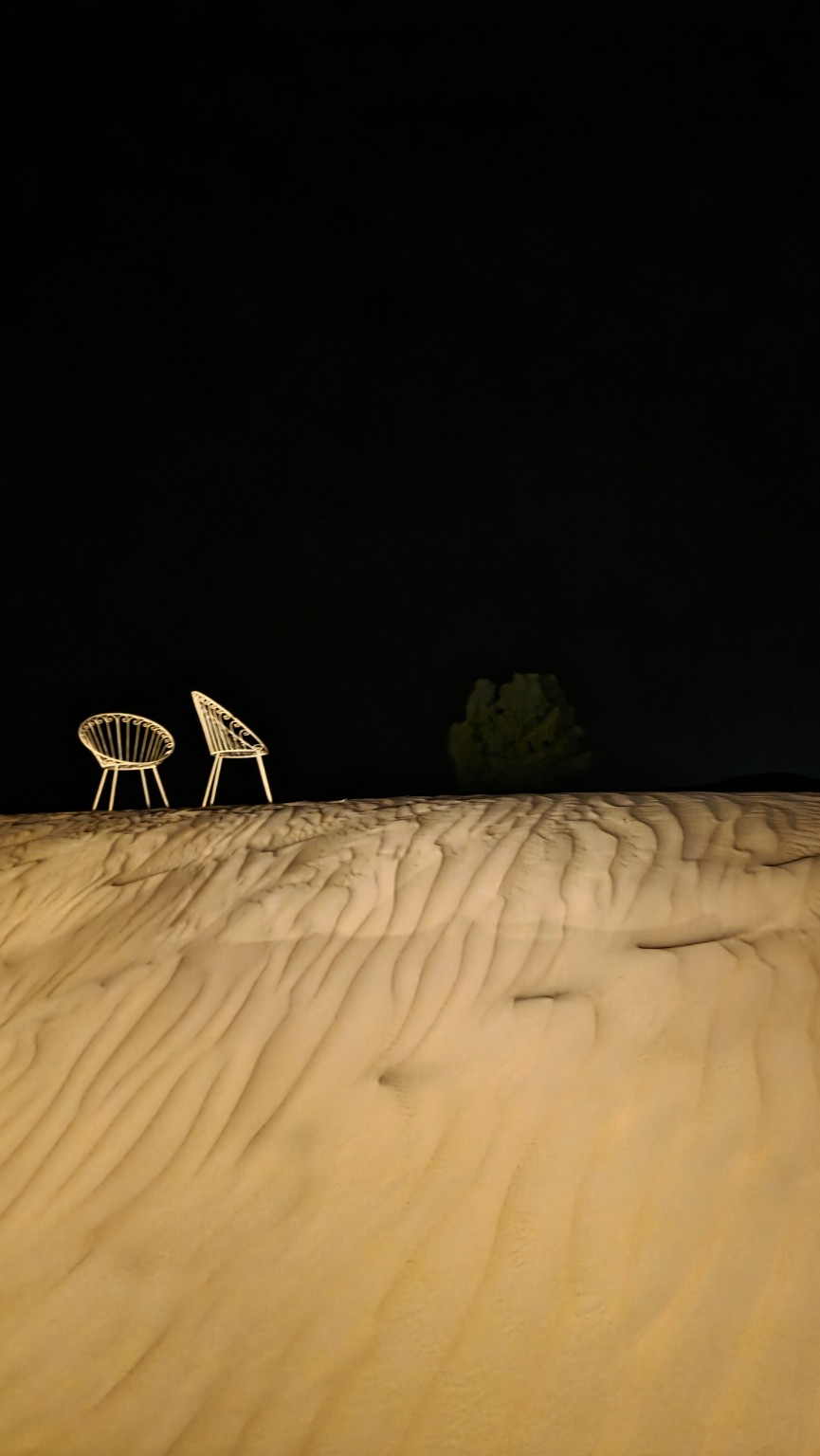
Yet one image especially remains from that evening: two empty chairs on the sand. Lit against the darkness, they stood above a dune surface covered in tiny tracks and hollows. So few objects in such a vast space. The whole scene seemed to invite you to sit, with nothing particular needing to be done.
A Morning without Shoes
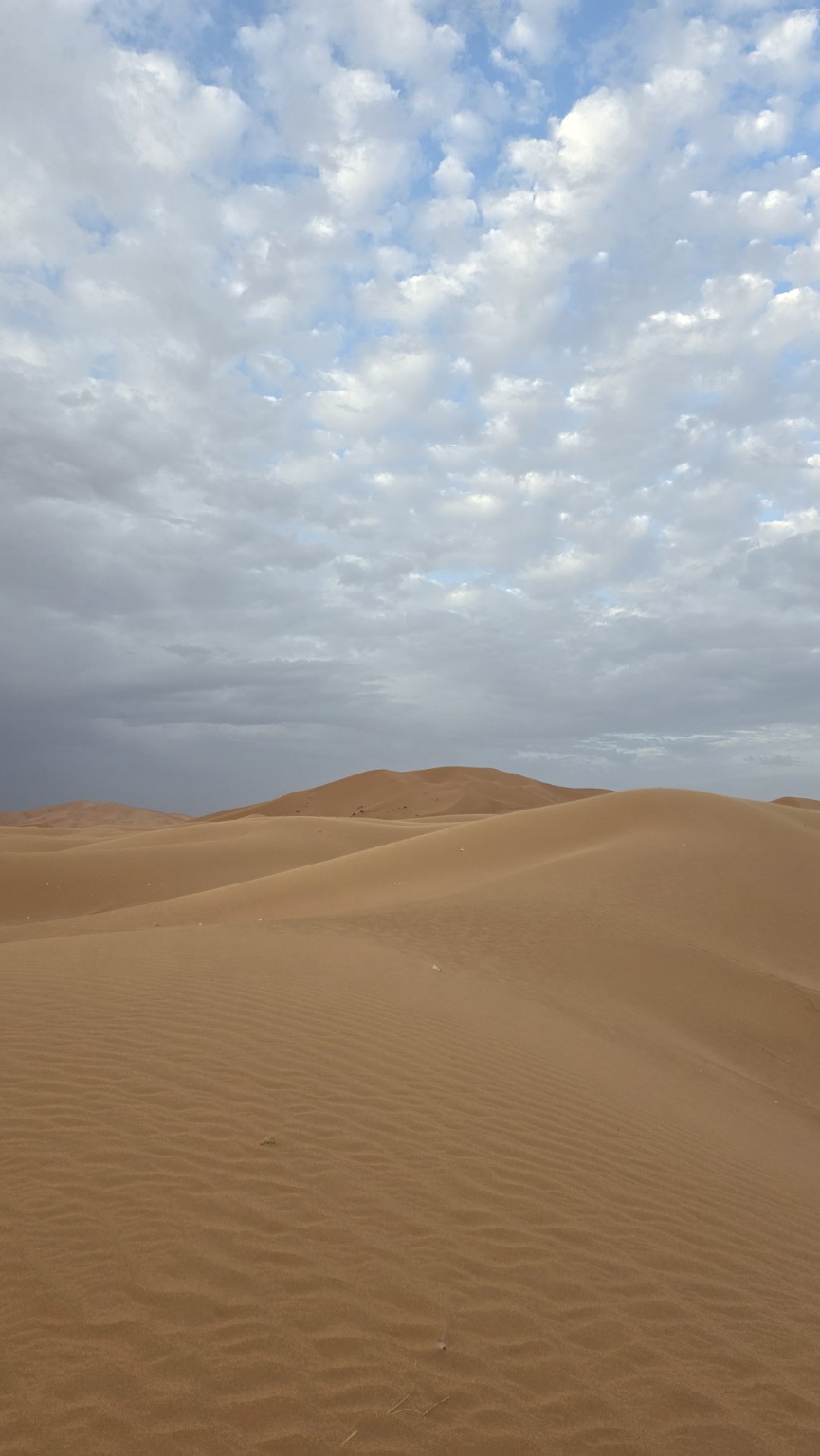
Sunset was beautiful, but I wanted to experience morning in my own way. The evening outing had been organised; now I simply wanted to leave camp and walk. Barefoot, in a tunic, across several dunes. My choice surprised our hosts, but that direct contact with the sand mattered to me.
Without shoes, you pay more attention to every step. You feel the surface, your foot sinking and the sand yielding as you climb. A slope that looks small from afar requires more effort than expected. Near the top, you slow down, cross the ridge and find the view opening again.
Sand between My Hands
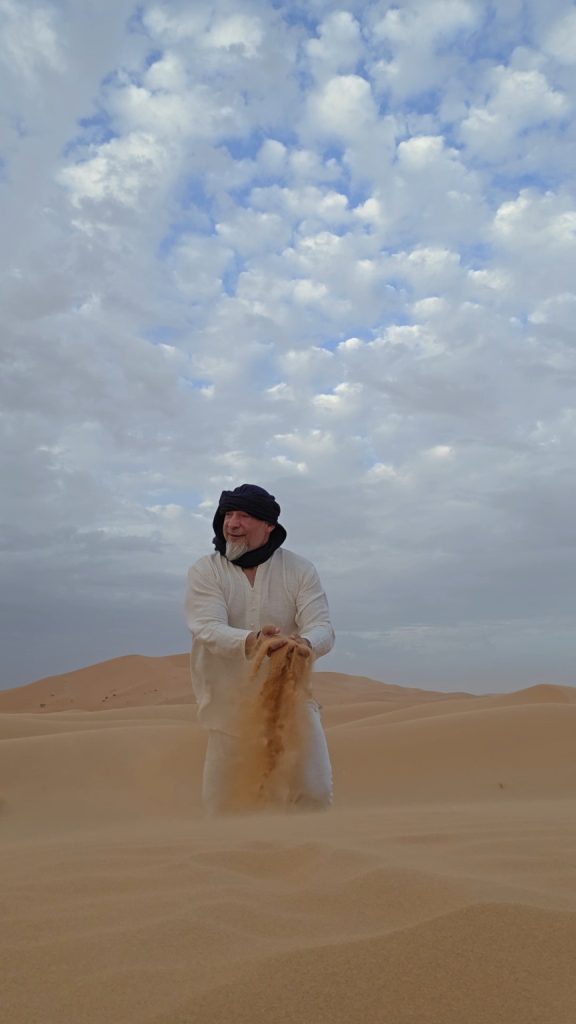
At one point, I scooped sand into my hands and let it run through them. In the photograph, it falls before me, with dunes and a great sky behind. A simple, almost childlike movement, yet in that space it felt sufficient.
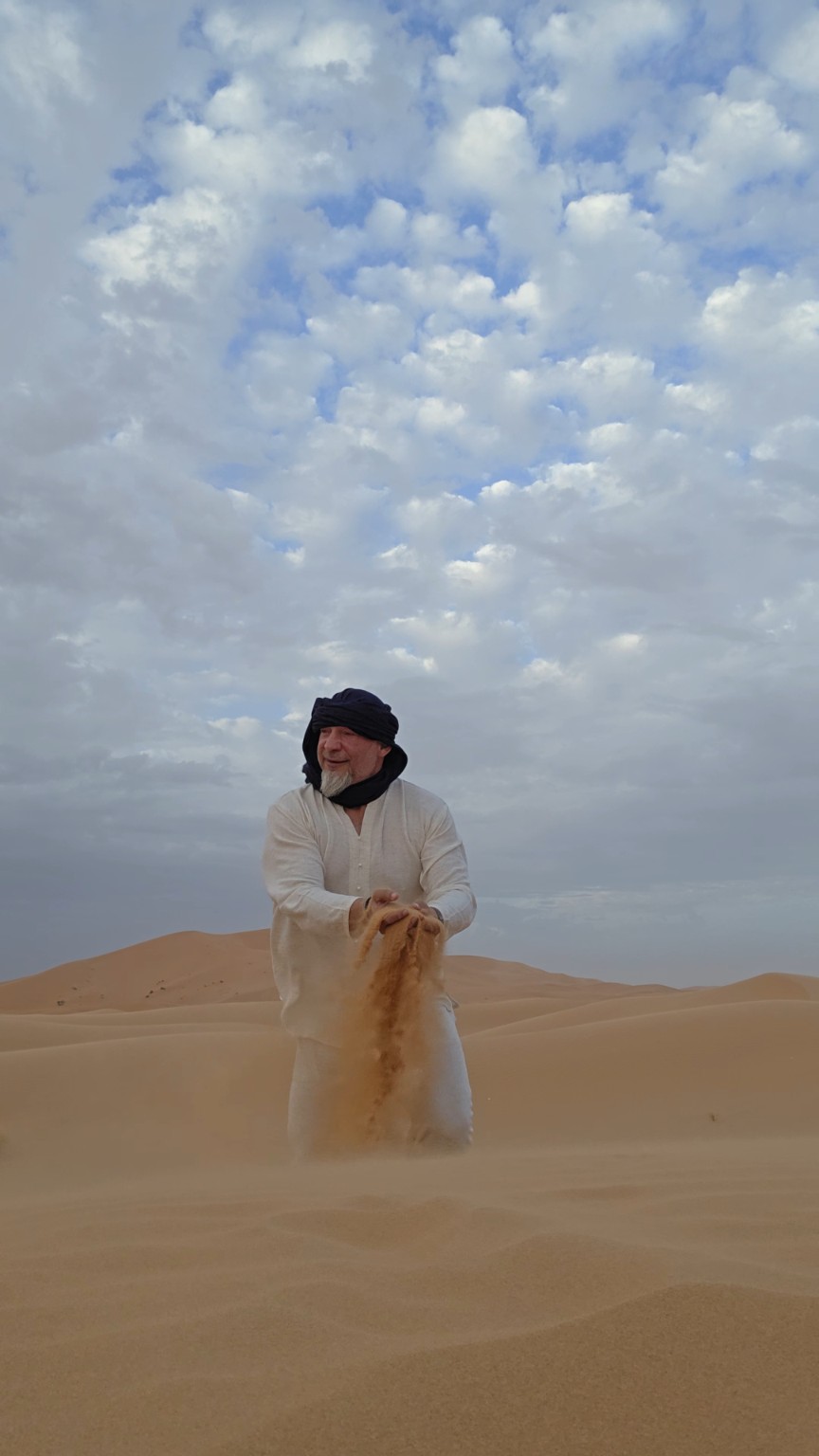
As sand slipped through my hands, my eyes returned to the slopes around me. After the guided evening outing and music at camp, I spent this morning walking at my own pace. It was pleasant briefly to stop following a schedule and remain wherever I liked.
Silence That Leaves You with Yourself
I sat on the sand: tunic, scarf, bare feet and a view continuing beyond the next ridge. After walking, it felt right to stay still and listen to that almost complete silence.
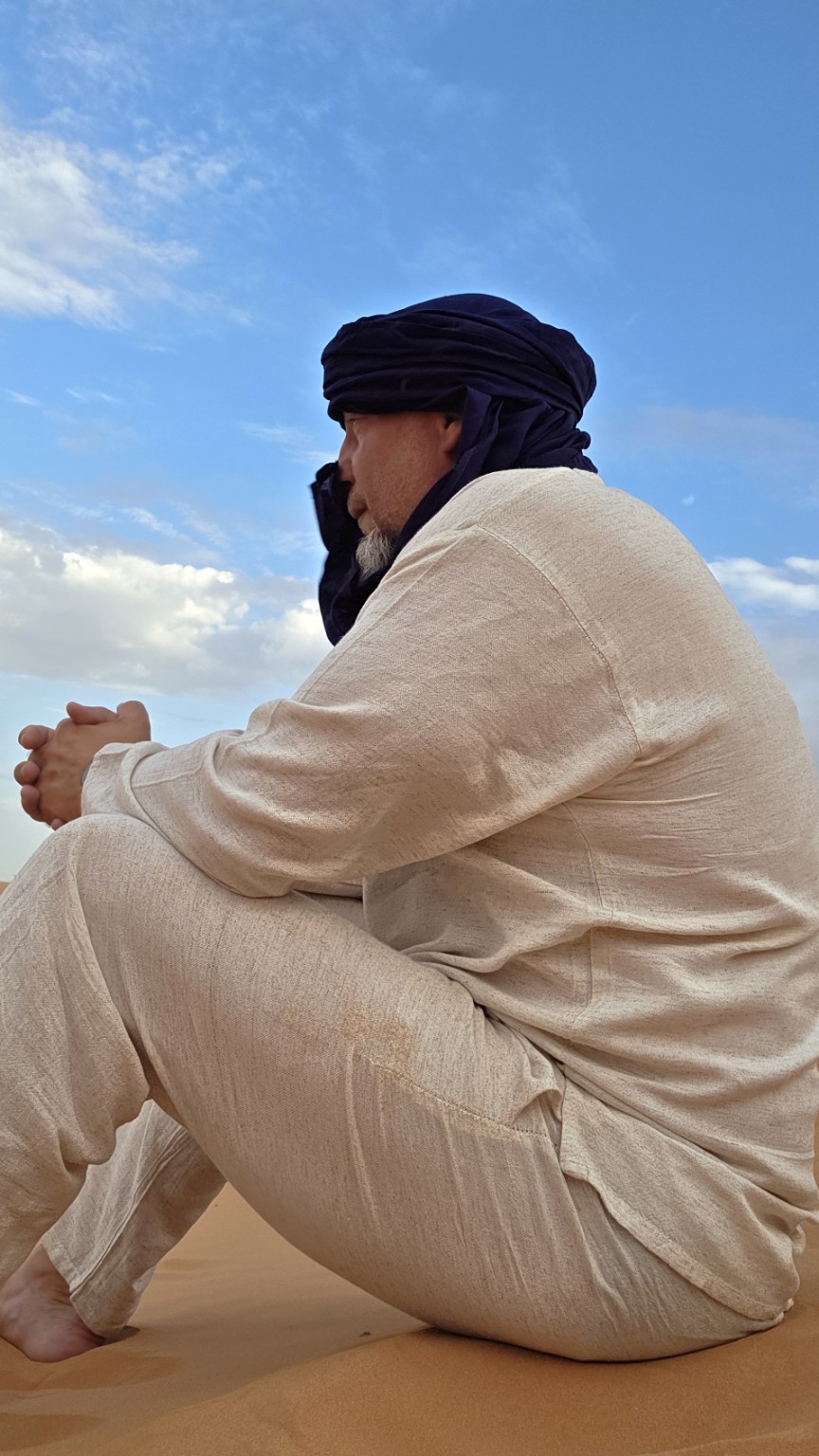
For me, it was also a spiritual moment. I did not need to choose special words. Gratitude was simple: for life, the morning, the possibility of coming here and still being surprised by beauty. Sometimes everyday worries keep me so occupied that I miss how great that alone already is.
Erg Chebbi became the heart of my experience of Morocco. Cities, mountains and people along the way had brought me here; among the dunes, I finally had time to let it all settle.
Returning towards camp, I left a trail of bare footprints behind me. I did not know how long it would remain visible. Having walked it was enough.
Previous instalment: At the Edge of the Dunes: Tea, Stone and Song.
Continue the journey: From Sand to Cedars – From Merzouga to Fez.